TL;DR
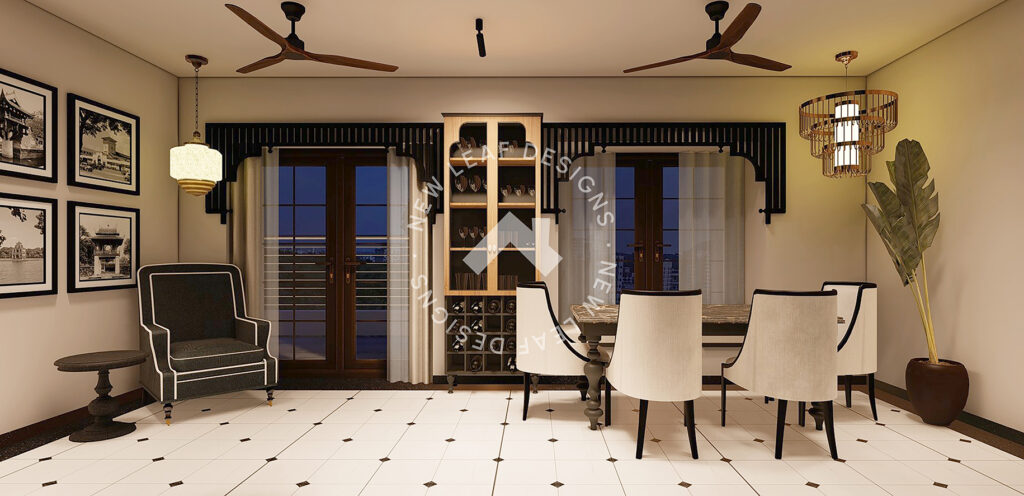
3D interior design visualization helps homeowners see their space before construction begins, reducing costly design mistakes during execution. At New Leaf Designs, we use 3D visualization to help clients validate:
- furniture proportions and circulation space
- lighting placement and ceiling design
- kitchen layouts and storage planning
- materials, finishes and colour combinations
This guide explains what 3D interior design visualization actually does, when it’s necessary, and how to review 3D renders using a practical 10-point checklist before approving them.
Planning a home interior project? Book a free consultation below to review your design in 3D before execution begins.
Many homeowners approve interior designs using only drawings or moodboards — only to discover problems once execution begins.
3D visualization is usually seen as a marketing add-on.
Others assume it’s just a few realistic images sent over WhatsApp.
And many believe it’s purely aesthetic—something you look at, approve, and move on from.
In reality, 3D interior design visualization is a strategic design tool, one that plays a critical role in decision-making, budgeting, execution clarity, and risk reduction—when done right.
At New Leaf Designs, our 3D interior design consultation services are used both in full execution projects and in online interior design consultations for homeowners across India. This guide also explains how to review 3D interior design visuals intelligently using a practical 10-point checklist.
So, What Is 3D Interior Design Visualization—Really?
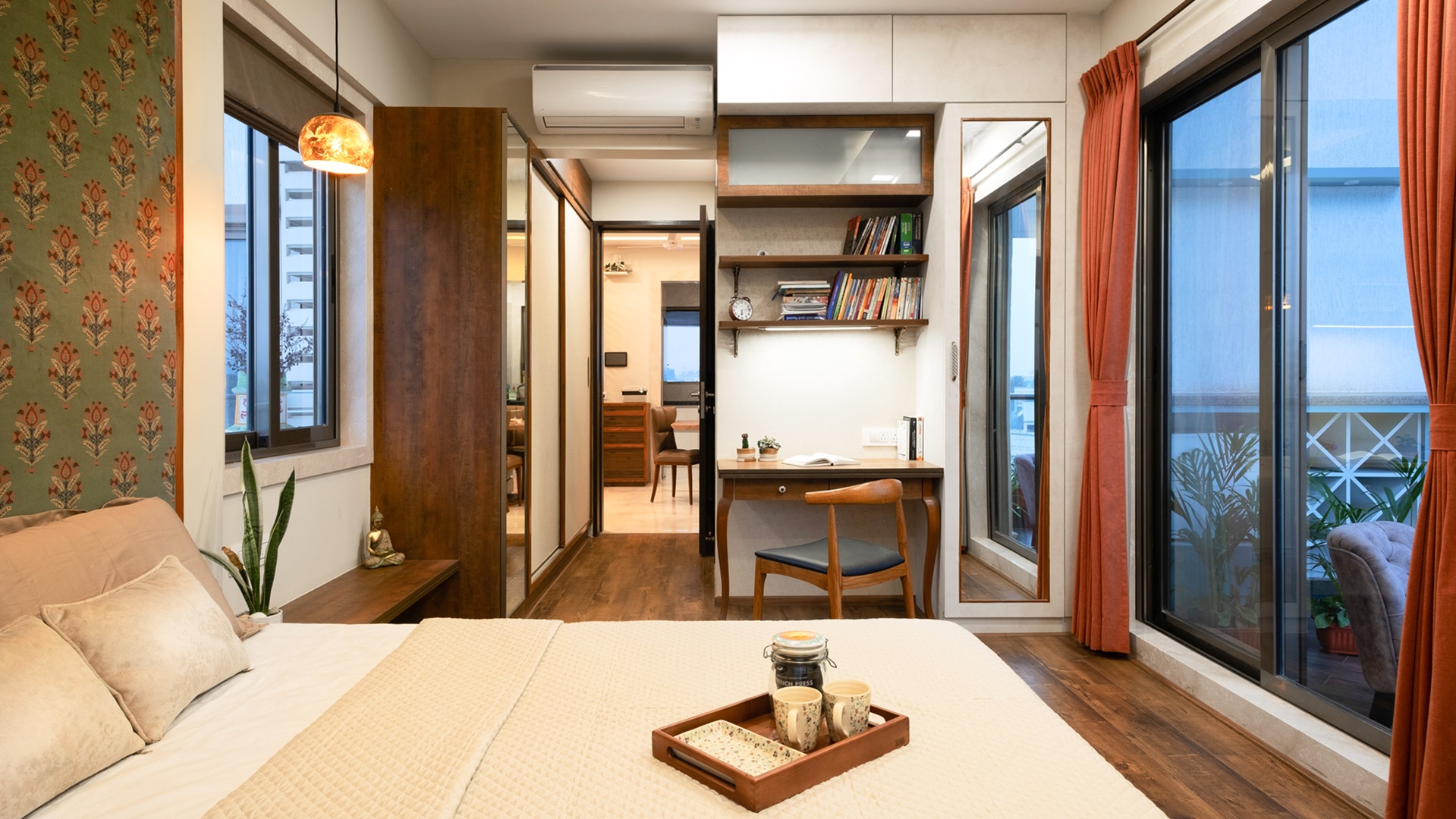
At its core, 3D interior design visualization helps homeowners understand space before it’s built. Think of it as the bridge between abstract ideas and physical reality. It allows you to:
- Comprehend spatial proportions, furniture heights, and clearances
- Visualise lighting behaviour—natural and artificial
- See how materials, finishes, and colours interact
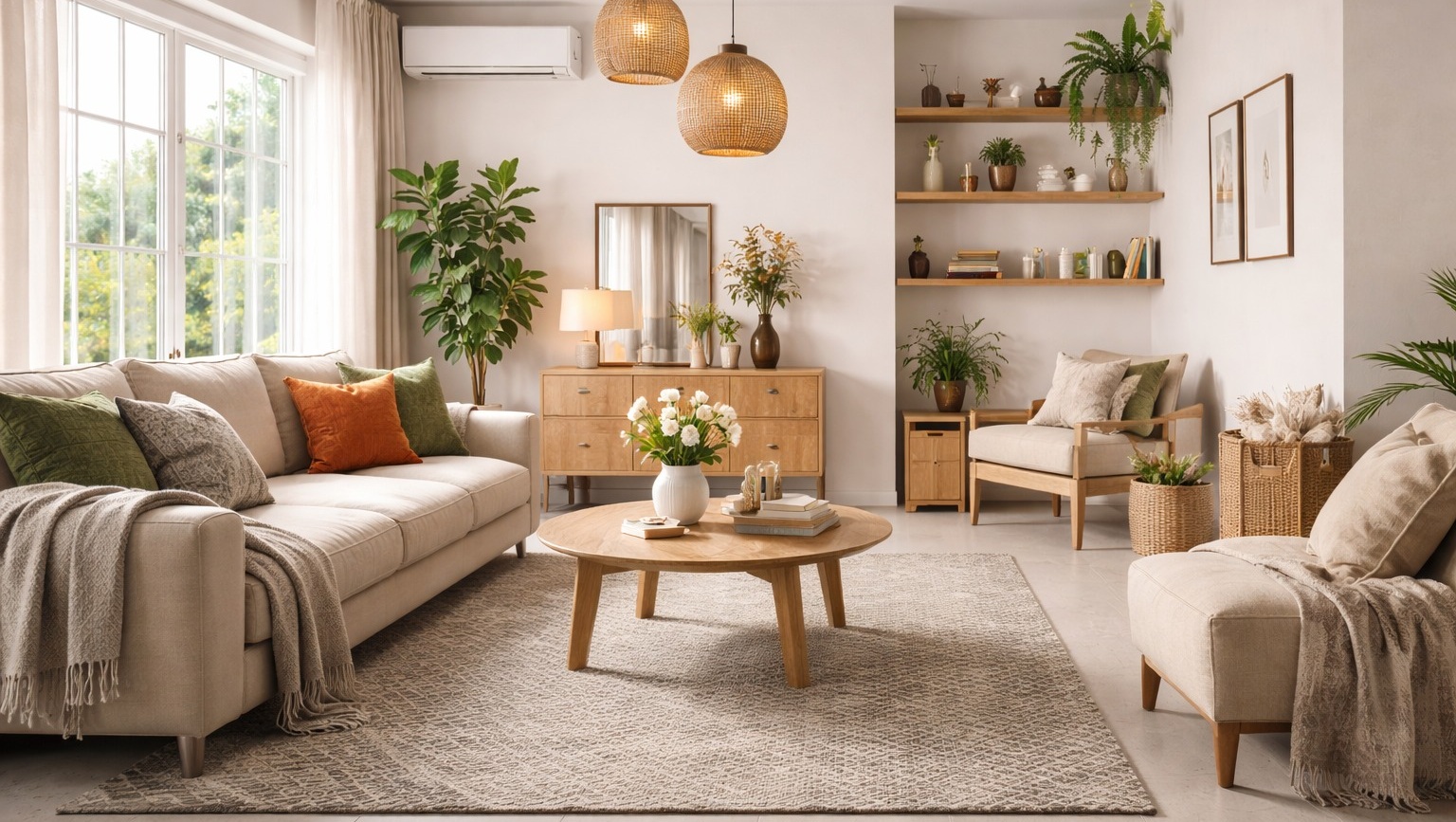
- Evaluate whether a style truly works in your home, not just on Pinterest
- Make confident decisions when you’re unsure or “on the fence”
When Do We Introduce 3D Visualization in Our Interior Design Process?
In our 3D interior design services, visualization begins only after:
- Furniture layouts are finalised
- Circulation and functionality are resolved
- Concept boards or moodboards are locked
Why? Because online 3D interior design should never be used to “discover” the layout. It is meant to validate and test decisions already made on paper. This is where the design moves from concept to practical form—showing how a selected moodboard or style will translate into the client’s actual space, with real dimensions and constraints.
Common Misconceptions About 3D Interior Visualizations
“3D renders are quick and easy”
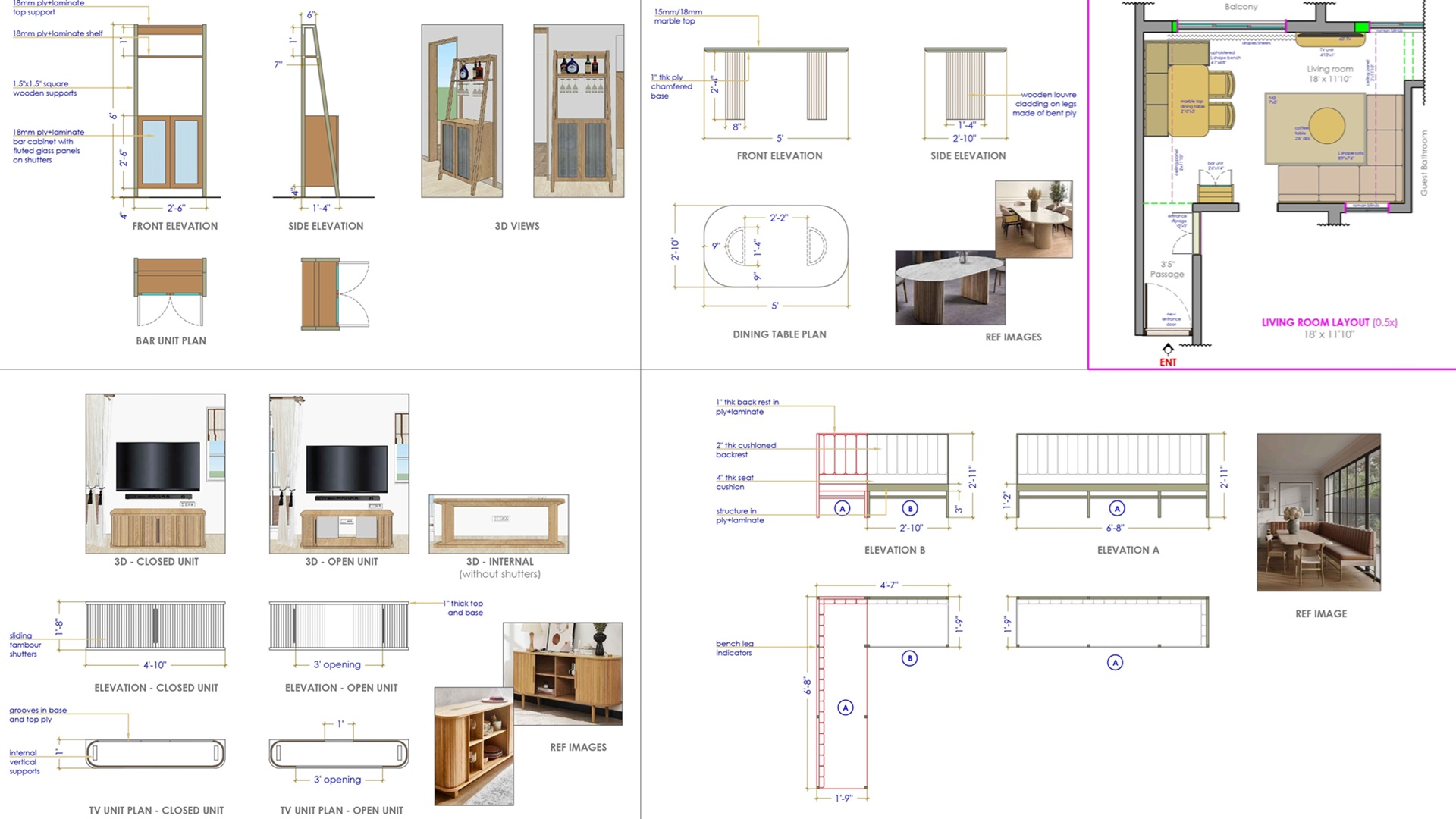
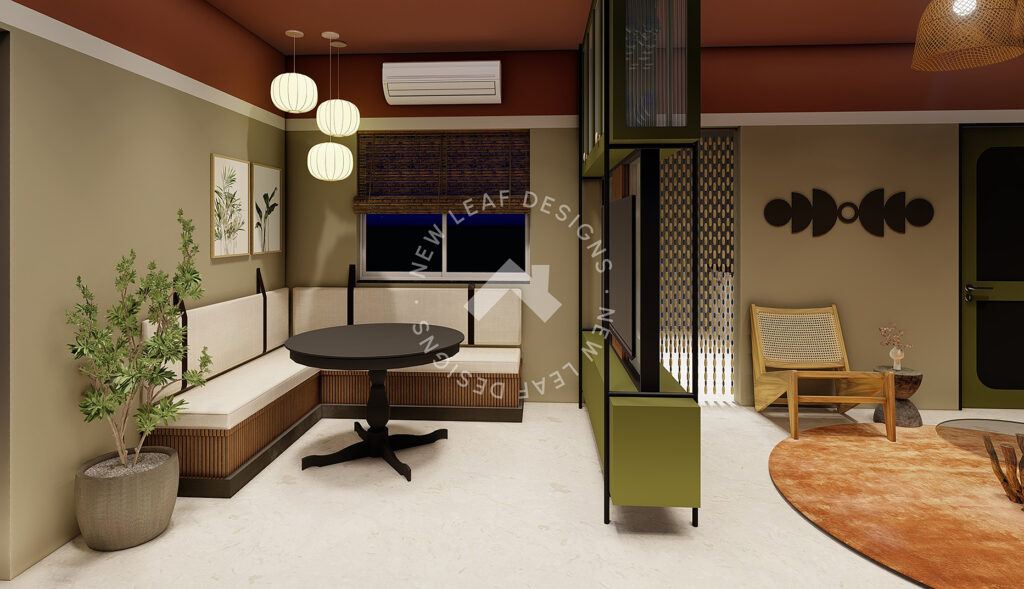
High-quality 3D interior visualizations are not created in hours or days. Unlike modular companies that use pre-programmed software libraries, we build our 3Ds from scratch—accounting for:
- Exact plywood / blockboard / MDF thicknesses
- Precise groove details down to millimetres
- Custom furniture proportions
- Real material finishes selected for execution
This level of detailing makes execution smoother and reduces site-level confusion.
“The real space will look 100% like the 3D”
A 3D is a representation, not a photograph of the future. Actual materials, lighting conditions, and on-site variables can differ. The goal of 3D interior design visualization is accuracy—not illusion.
A Real Case Where 3D Visualization Prevented Costly Mistakes
This is an example of how good 3D visualization helps prevent common 3D interior design mistakes before construction begins. We once conducted a design audit for a client who already had 3D views from another agency. At first glance, the visuals looked impressive. But when read critically, several red flags emerged:
- Unnecessary wallpaper and wall paneling in low-impact areas
- Over-designed false ceilings adding avoidable cost
- Incorrect dining table proportions
- Wrong bar stool heights
- Excessive and redundant lighting fixtures
Had these 3D interior visualizations been executed as-is, the project would have gone significantly over budget—without adding real value. A careful review and redesign helped the client eliminate unnecessary elements and realign the interiors with their budget and lifestyle.
A detailed guide on hidden interior costs homeowners should know..
When Should Homeowners Use 3D Interior Design Visualization Services?
Around 7–8 years ago, we had clients who were in a rush and chose NOT to wait for 3Ds. The project involved structural changes. While the 2D drawings were technically correct, the clients couldn’t fully visualise the outcome. A structural beam—non-demolishable—ended up interrupting what they expected to be a wide kitchen–dining opening. By the time the issue became evident, the wall had already been broken.
This is where 3D interior design visualization proves invaluable: it exposes design limitations before irreversible work begins.
What Our 3D Visuals Focus On (And What We Avoid)
In our 3D interior consultation process, we prioritise:
- Structural clarity (beams, columns, soffits)
- Furniture proportions and ergonomics
- Built-in detailing that affects execution
- Overall look-and-feel clarity of the space
We do include basic accessorising and styling cues—but we intentionally avoid over-styling or adding distractions that fall outside the project scope. The goal is not to impress. The goal is to inform and guide decisions.
Realism vs Clarity: How We Strike the Balance
While photorealism has its place, our priority is functional accuracy. Our online 3D visualizations focus heavily on:
- Correct kitchen counter heights and overhead cabinet sizing
- Wardrobe shutter styles, handle placements, drawer configurations
- Appliance placement and clearances
- False ceiling heights, profiles, and cut-outs
- Storage depth, seating comfort, and movement space
Only after these fundamentals are resolved do we refine finishes and visual softness. Because realism without correctness is misleading—and expensive.
How Contractors Interpret 3D Visuals (And Where It Breaks Down)
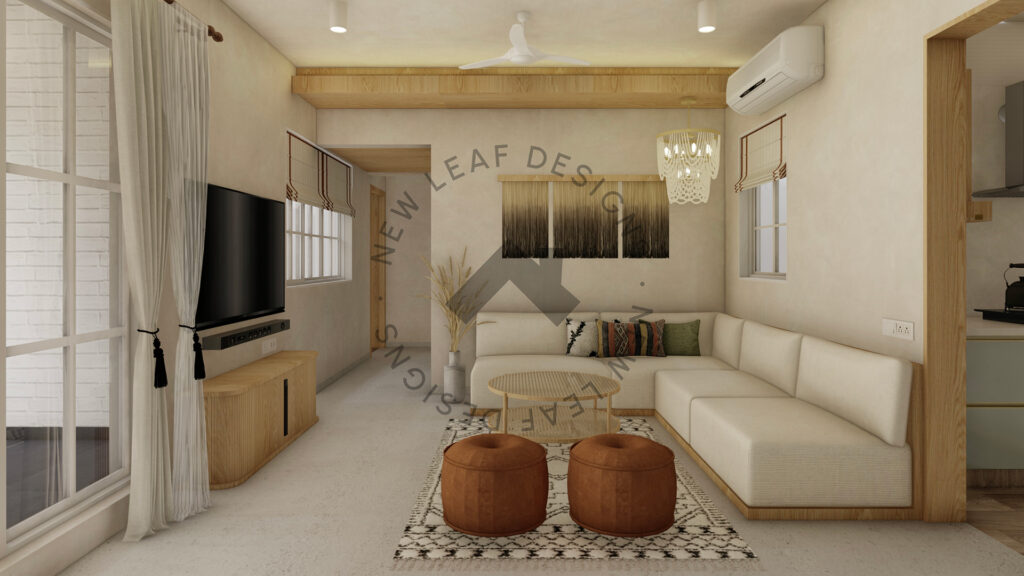
In India, contractors often treat 3D interior visualizations as visual references, not execution documents. This works well for:
- Understanding intent
- Visualising finished outcomes
- Aligning on general aesthetics
But problems arise when 3Ds are:
- Not supported by detailed drawings
- Over-styled without technical backing
- Interpreted without understanding scale or material specs
That’s why we treat 3Ds as part of a system, always supported by drawings, specifications, and clear explanations—so nothing is left open to interpretation.
When Is 3D Interior Design Visualization NOT Necessary?
3Ds are powerful—but not mandatory for every project. They may not be essential for:
- Styling-only or décor-focused projects
- Homes with mostly loose furniture
- Projects involving minimal built-in elements
- Civil-heavy work where layouts and sections are sufficient
In such cases, moodboards, concepts, and drawings may do the job effectively.
Find out how to use Moodboards effectively for interior makeovers.
3D Interior Design Review Checklist for Homeowners
Before you approve any 3D interior design visualization—whether it’s part of a full design package, a 3D interior design consultation, or a professional 3D interior design visualization service—pause and review it using this checklist.
1. Space & Proportions
- Do the furniture sizes feel realistic for the room?
- Is there enough walking space around sofas, beds, dining tables, and kitchen counters?
- Are passages, door swings, and circulation paths clear and comfortable?
2. Furniture Heights & Ergonomics
- Are sofa seat heights, dining chairs, bar stools, and bed heights comfortable?
- Do TV units, headboards, and wardrobes feel proportionate to wall heights?
- Are kitchen counter and overhead cabinet heights practical for daily use?
This is where well-detailed 3D interior visualizations add real value.
3. Lighting Placement & Quantity
- How many lights are shown in the 3D—and why?
- Are there too many decorative lights that may inflate costs unnecessarily?
- Is there a balance between ambient, task, and accent lighting?
Ask: Which lights are essential, and which are optional?
4. Materials & Finishes
- Are the finishes shown (laminates, veneers, paints, stones) available locally?
- Are glossy vs matte surfaces clearly intentional?
- Will these materials be easy to maintain in daily Indian household conditions?
Remember: online 3D visualizations may show ideal finishes—confirm what will be used in execution.
5. Storage Design & Internal Planning
- How many drawers, shelves, and hanging spaces are actually provided?
- Are shutters, grooves, and handle placements clearly defined?
- Do storage depths look usable, or just visually appealing?
Great 3D interior design services show storage logic, not just external form.
6. False Ceilings & Structural Elements
- Are ceiling heights clearly visible and comfortable?
- Do false ceiling designs feel necessary or overdone?
- Are beams, columns, or soffits addressed intelligently—or hidden poorly?
Structural clarity is one of the biggest strengths of good 3D interior design visualization.
7. Appliances & Fixtures
- Are kitchen appliances shown in correct sizes and locations?
- Is there enough clearance for opening fridge doors, ovens, and washing machines?
- Are bathroom fixtures realistically placed for plumbing and usage?
Never assume these details are “adjusted later.”
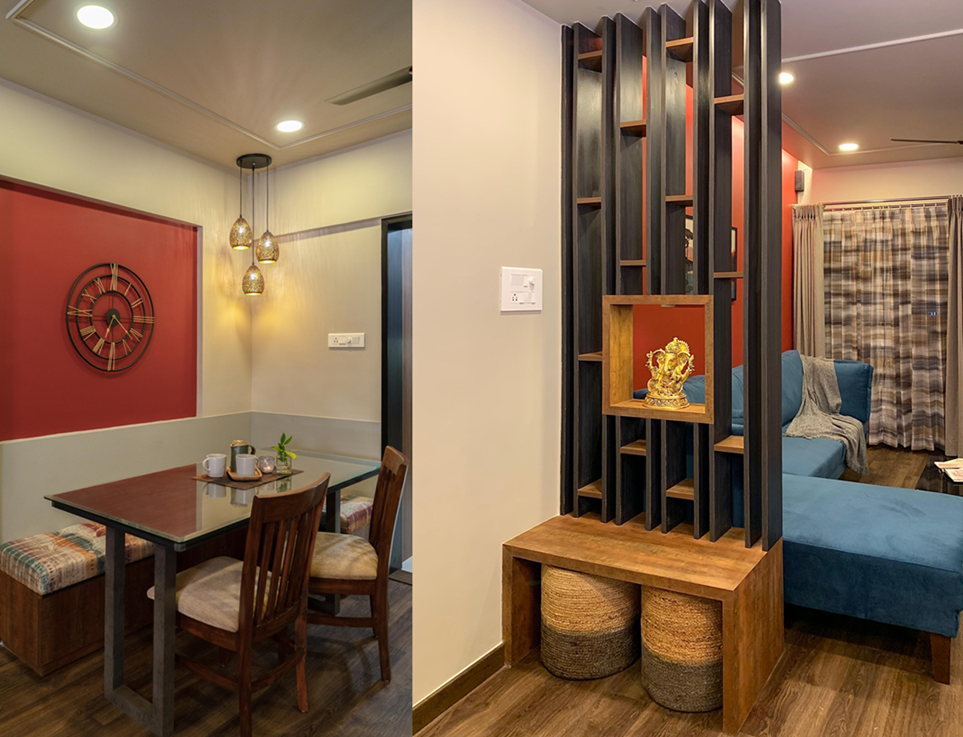
8. Decorative Elements (Question Everything)
- What are the wallpapers, panels, jaalis, or feature elements made of?
- Are they necessary—or just added for visual impact?
- Will removing them affect the design intent?
This is where many projects unknowingly go over budget.
9. Realism vs Reality Check
- Does the designer clarify what may differ on site?
- Are lighting moods, accessories, and textures explained honestly?
- Do you understand what’s aspirational vs what’s guaranteed?
A good 3D interior consultation includes transparency—not promises.
10. Execution Readiness
- Can your contractor clearly understand this 3D?
- Is it supported by drawings and specifications?
- Do you feel confident that what you’re seeing can be built accurately?
If not, pause and ask more questions—before approving.
The One Thing Homeowners Must Remember
3D interior design visualization is a strategic decision-making tool—not just an aesthetic one. Homeowners should learn to scrutinise 3Ds intelligently, not skim through them. Ask questions about:
- Number and placement of lights
- Reflective vs non-reflective surfaces
- Fabrics, finishes, and materials shown
- False ceiling designs and heights
- Visible hardware, joinery, and detailing
- Features like jaalis, wallpapers, and paneling—what they’re made of, how they’re sized, and why they exist
When paired with clear drawings, material specifications, and cost planning, 3D visualization becomes one of the most powerful tools in an interior design process.
If you’re planning a home project and want clarity before execution, explore our 3D interior design visualization services or book a free consultation with New Leaf Designs below!