TL;DR – Hidden Interior Design Costs Most Homeowners Miss
Interior budgets often increase during execution because certain costs are not fully considered during planning. The most common hidden interior costs in homes include:
- hardware upgrades
- additional electrical points
- false ceiling add-ons
- civil corrections in older homes
- material wastage
- transport and site logistics
- GST and on-site consumables
When these are clarified early through detailed estimates (BOQs), specifications, and drawings, most budget surprises can be avoided.
If you’re planning interiors and want a clear cost breakdown before execution, you can book a free consultation with New Leaf Designs to know more.
What are some of the most common hidden interior design costs?
Interior budgets often increase during execution because of hidden interior costs that are not discussed during early planning. Many homeowners researching home renovation costs don’t realize that final interior expenses can increase due to these hidden factors. Understanding these unexpected interior design costs helps homeowners plan better and avoid budget overruns during renovation.
In this guide, we break down the most common hidden interior costs, why they happen, and how to protect your budget without compromising quality.
1. Unplanned Hardware Upgrades
Hardware upgrades are one of the most common hidden costs in home interiors, especially in kitchens and wardrobes where mechanisms and accessories vary widely in price. Most homeowners underestimate how much hardware affects the budget.
Where the cost comes from:
- Soft-close hinges
- Drawer channels
- Lift-up mechanisms
- Sliding wardrobe systems
- Pantry pull-outs
- Tall units
- Corner units
- Accessories like baskets and racks
- Door handles, locks, mortise locks, etc
It usually becomes a hidden interior cost as quotations usually include a base price with basic hardware. Then during selection, clients naturally tend to choose soft-close instead of normal hinges, a tall pantry unit, premium sliding channels, etc. Each upgrade adds a little, but combined, it’s a significant amount.
How to avoid it:
- Ask for a hardware specification list upfront
- Decide which accessories you actually need
- Avoid overloading your kitchen with fancy mechanisms, many become unused later
2. Electrical Changes and Extra Points
Electrical changes are another frequent cause of interior budget overruns, particularly when layouts evolve after furniture design begins. The cost comes from extra electrical points for:
- Additional concealed switchboards
- Task lighting
- LED profiles
- Extra power sockets
- Appliance points in kitchen
- AC points
- Internet wiring, router placements
It becomes a hidden interior cost as your electrical needs evolve during design: “Oh, let’s add a LED strip here.” “I need a socket near the bed for my laptop.” “There should be a point for the dishwasher.” Each additional point requires wires, labour, fittings, and adds to the cost.
How to avoid it:
- Plan your electrical layout early (bedside, workstation, TV unit, appliances)
- Share your lifestyle habits: WFH? Gaming? Smart home?
- Stick to a fixed lighting plan instead of adding on the go.
Some quick tips on how to effectively light your home interiors.
- Be extremely mindful of the number sockets and light points and avoid unnecessary additions
3. False Ceiling Add-Ons
Where the cost comes from:
- Cove lighting, additional coves
- LED profile designs
- Multi-level ceilings
- AC ducting bands
- Moisture proof ceiling boards
It becomes a hidden interior cost as most designers give a basic estimate. But during 3D design review, homeowners often want cove lights, panelled design features, profile lights etc. Each metre of profile lighting or extra layer increases gypsum + electrical cost.
How to avoid it:
- Finalise ceiling design before execution
- Ask for a breakdown: basic vs decorative
- Prefer simpler, clean ceilings, cost-effective + modern
4. Unforeseen Civil Work
In renovation projects, unexpected civil work is one of the biggest hidden interior renovation costs homeowners encounter. Where the cost comes from:
- Demolition and disposal of old furniture/kitchen
- Replacing doors/windows and frames
- Tiling replacement
- Waterproofing
- Plumbing changes
- Levelling floors
- Removing debris
- Wall PoP punning
- Overall electrical upgrades
It may become a hidden interior cost as when contractors start breaking old structures, they often find uneven flooring or loose tiles, damaged plumbing lines, uneven walls (that may need PoP punning), moisture issues, etc. These must be fixed to avoid long-term damage, but they weren’t originally budgeted.
How to mitigate it:
- Do a pre-renovation site audit before budgeting
- Factor in a 10–15% contingency for older homes
- Avoid unnecessary layout shifts
5. Material Wastage Costs
Laminate, veneer, quartz, PU paint, and plywood all have wastage.
Where the cost comes from:
- Extra sheets for grain matching
- Extra material for large shutters
- Additional coats of paint, or using too many different shades
- Cuts and reworks
- Poor electrical planning leading to longer wiring or rerouting lengths
- Using too many different types of laminates/finishes for smaller pieces of furniture
- Not picking the right tile sizes as per the space, or the right slab size for countertops, and these cause material wastage
It becomes a hidden interior cost if standard sizes are not followed. For example, laminates and plywood come in fixed sizes and proper planning in terms of sizes is absolutely necessary. Also, selections of materials need to be done smartly, be it tiles, slabs, or even fabrics to minimize wastage.
How to avoid it:
- Avoid too many different or varying material selections
- Choose standard sizes where possible
- Avoid vertical grain veneers for wide shutters
6. Delivery, Transport & Loading Charges
Where the cost comes from:
- Material delivery
- Labour for loading & unloading
- Staircase carry (if no lift)
- Outstation transportation
- Last-mile handling
It becomes a hidden interior cost as quotations often include item cost but exclude transportation, which is calculated later based on distance, vendor delivery charges, building access, etc
How to avoid it:
- Ask for a transport estimate before finalising the order
- Check if your building has service lift access
- Factor in a 5–10% contingency in the budget
7. GST & Other On-Site Consumables
GST of 18% on interior services makes a significant difference. Additionally, consumables are required even if not explicitly listed, such as site covers to protect existing tiles, slabs or architectural features, installing temporary doors, handles, locks or lights for on-site work, pest control/deep cleaning charges post work completion, etc.
It becomes a hidden interior cost as homeowners see a “base quote” and forget GST applies on the total. Consumables are difficult to estimate in the early stages and often increase as the work progresses or as requirements arise.
How to avoid it:
- Always calculate total cost = base cost + GST
- Ask for a list of possible consumables
- Factor in a 5–10% contingency in the budget
Hidden Interior Cost Planning Checklist for Pune Homes
Before you start your interiors, ask your execution team for:
- Complete BOQ (Bill of Quantities)
- Material specifications
- Hardware list with brand names
- Electrical layout plan
- False ceiling drawings
- Transport & loading charges
- GST calculation
- Contingency estimate
- Pre-renovation site audit
99% of cost overruns disappear when conversations happen early.
Explore our guide on which questions to ask before hiring an interior designer in Pune
Why Interior Budgets Often Increase During Execution
Many homeowners assume that the first quotation reflects the final cost of their interiors. In reality, interior renovation costs often increase during execution because some details are not fully finalized during planning. Costs typically increase when:
- material selections change
- electrical layouts expand
- additional ceiling features are added
- civil corrections are discovered on site
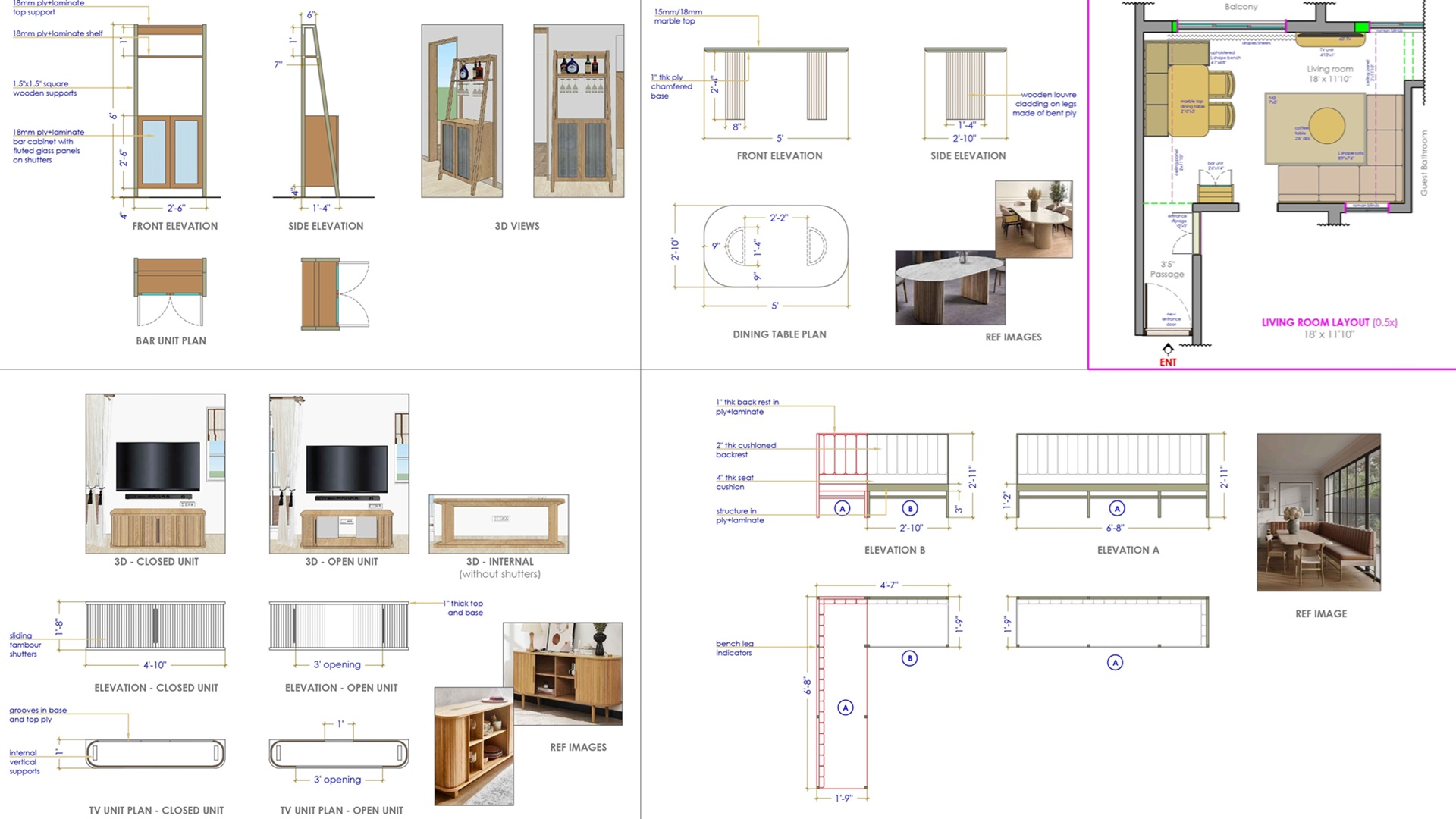
This is why experienced designers emphasize detailed estimates (BOQs), technical drawings, and early planning before starting execution.
Final Thoughts
As experienced interior designers in Pune, we have observed that hidden interior costs don’t come from cheating; they come from lack of clarity. Hidden interior costs are one of the most common reasons home renovation budgets increase unexpectedly. In most cases, these expenses appear because certain details — materials, electrical layouts, or site conditions — were not fully clarified during early planning.
With proper drawings, specifications, and BOQs, unexpected interior design expenses can be significantly reduced.
Explore related interior cost & planning guides:
Home Interiors Cost in Pune (2026 Guide)
Interior Budget Planning for Pune Homes
Common Interior Budget Mistakes (And How to Avoid Them)
How to Compare Interior Design Quotes | A Homeowner’s Guide