TL;DR
Is interior design worth it for a small home? It can be, especially when space planning, storage, kitchen design or multiple contractors are involved.
A small home doesn’t necessarily need expensive interiors, but it does need better planning because every square foot matters. Professional design can help you avoid costly mistakes, improve storage, choose appropriately sized furniture, and plan electrical, lighting and carpentry before execution begins.
However, you don’t always need a full-service interior designer. Depending on your project, DIY, a design-only consultation, or a simple consultation may each make sense.
The goal isn’t to spend more on your small home. It’s to spend intelligently on the things that are difficult or expensive to change later.
If you own a small apartment, you may have wondered whether hiring an interior designer is actually worth the investment. After all, a smaller home means fewer rooms, less furniture and, presumably, a smaller interior budget. So why spend money on professional design?
The answer isn’t simply that small homes need “more design.” They need better decisions.
When space is limited, every piece of furniture, every storage unit, every electrical point and every circulation area has an impact on how comfortably the home functions. A poorly planned decision can take away valuable usable space, while a well-planned one can make a compact home feel considerably more spacious and practical.
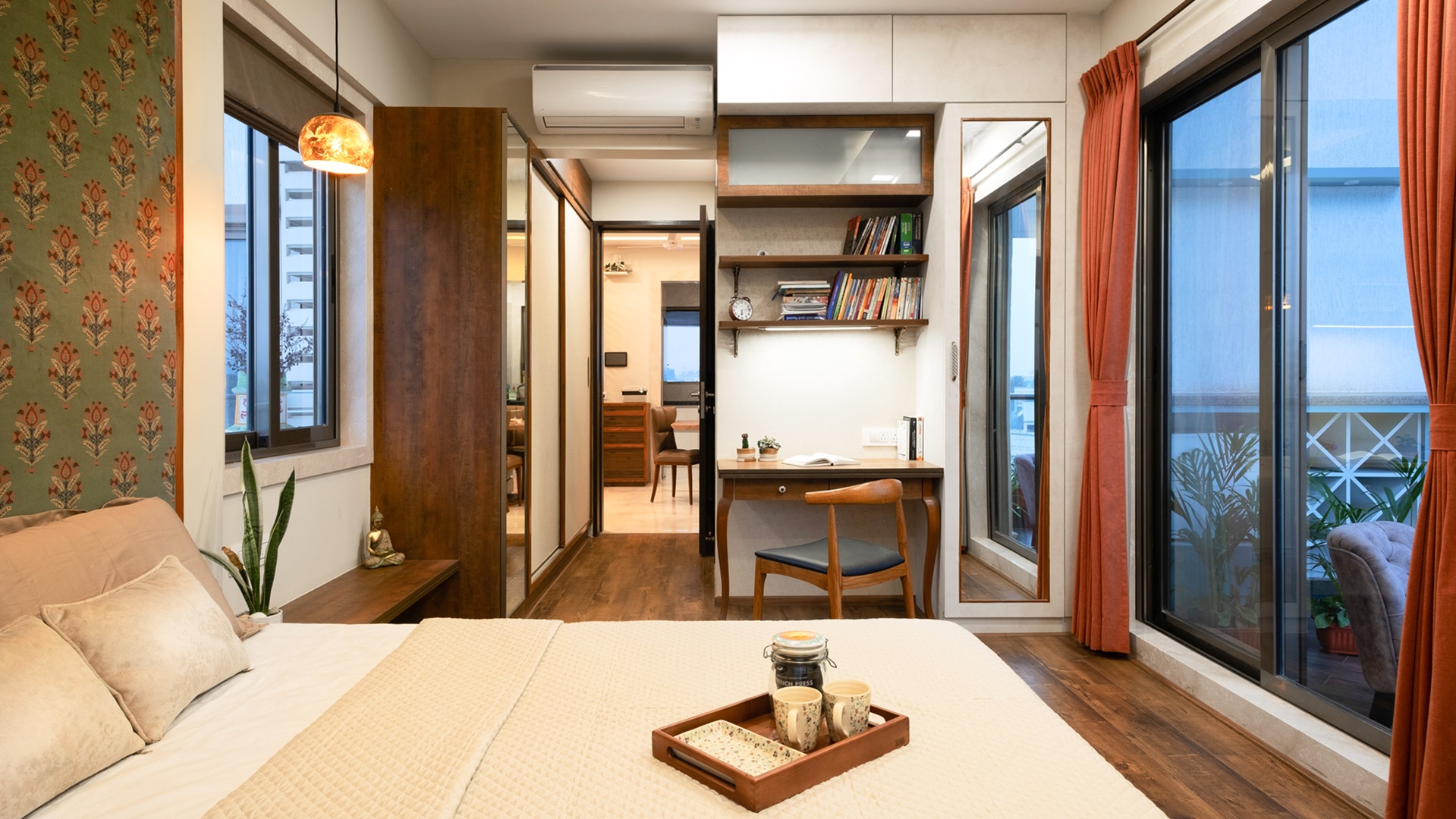
After working on residential interiors in Pune, we have found that the value of professional interior design for a small home is less about making the space look expensive and more about making the available space work harder.
So, is interior design worth the investment for a small home?
It can be, but not every homeowner needs the same level of professional involvement.
This guide explains when hiring an interior designer makes sense, when you may be able to manage the project yourself, and how to make sure your design investment actually adds value.
Why Do Small Homes Need Good Interior Design?
In a large home, you may have some room to make inefficient decisions. A piece of furniture that is slightly too large or a storage unit that isn’t optimally planned may not significantly affect the overall space.
In a small home, the same mistake can affect the entire room. For example:
- An oversized sofa can restrict circulation.
- A poorly positioned wardrobe can make a bedroom feel cramped.
- An inefficient kitchen layout can reduce usable counter and storage space.
- Too much built-in furniture can make a small home feel visually heavy.
- Poorly planned electrical points can result in extension boards and visible wiring.
- Insufficient storage can quickly lead to clutter.
This is why small-home interior design is primarily about space planning and prioritization, rather than simply adding more furniture or décor.
Is Hiring an Interior Designer Worth It for a Small Home?
It depends. Hiring an interior designer can be valuable when your home requires significant planning, custom storage, kitchen work, civil changes or coordination between multiple contractors.
However, if you have a straightforward home, enjoy making design decisions yourself, have plenty of time and only need basic furniture and décor, you may not need a full-service interior designer.
The important question is not: “Do small homes need an interior designer?”
It is: “How complex is my project, and how much value will professional planning add?”
For some homeowners, the answer may be full-service interior design. For others, it may be a design-only consultation or simply a few targeted professional inputs.
Where Does Professional Interior Design Add Value in a Small Home?
A designer’s value isn’t limited to choosing colours, furniture or finishes.
For a compact home, professional design can help with several decisions that affect everyday usability.
1. Better Space Planning
The first priority should be deciding how the space will actually be used. A good layout considers:
- furniture dimensions
- walking clearances
- door and window positions
- circulation
- storage requirements
- television and electrical locations
- natural light
The goal isn’t to fit as much furniture as possible. It is to create a layout where the furniture you actually need fits comfortably without making the home feel crowded.
2. More Efficient Storage
Storage is often one of the biggest challenges in a small apartment. Instead of simply adding wardrobes and cabinets wherever there is an empty wall, storage should be planned around how you actually live. This may involve:
- full-height wardrobes
- overhead storage
- storage under beds
- multifunctional furniture
- better kitchen organization
- using awkward corners intelligently
- reducing unnecessary built-in furniture
3. Correct Furniture Proportions
A sofa that looks perfectly proportioned in a large showroom may be completely unsuitable for a compact living room. The same applies to beds, dining tables, coffee tables, TV units, etc. Professional planning helps determine the appropriate dimensions before you purchase or build something that cannot easily be changed later.
4. Electrical and Lighting Planning
Electrical planning is another area where mistakes can become frustrating after execution. The location of switches, sockets, lights, appliances, etc, should be considered alongside the furniture and storage layout.
In a small home, poor electrical planning can contribute to visible wires, extension boards and inconvenient furniture placement.
5. Material and Hardware Selection
Not every component of an interior needs to be the most expensive option. The important thing is knowing where to spend and where to save.
For example, compromising heavily on frequently used hardware, kitchen components or moisture-prone areas may create problems later, while certain decorative elements can often be simplified.
Good budget planning is therefore about optimizing the budget rather than simply cutting it.
Do You Need Full-Service Turnkey Interior Design for a Small Home?
Not necessarily and this is an important distinction. There are several ways to approach a small-home interior project.
Option 1: DIY
DIY can work well if:
- your layout is relatively straightforward
- you need limited carpentry
- you have enough time to research products and materials
- you are comfortable coordinating purchases
- you enjoy making design decisions yourself
- there are few technical or civil changes involved
In this situation, you may not need to pay for a full interior design service.
Option 2: Design-Only Interior Design
A design-only service can be useful when you want professional planning but intend to manage execution yourself. This can include:
- space planning
- concept development
- 2D layouts
- 3D visualization
- furniture planning
- lighting and electrical planning
- material recommendations
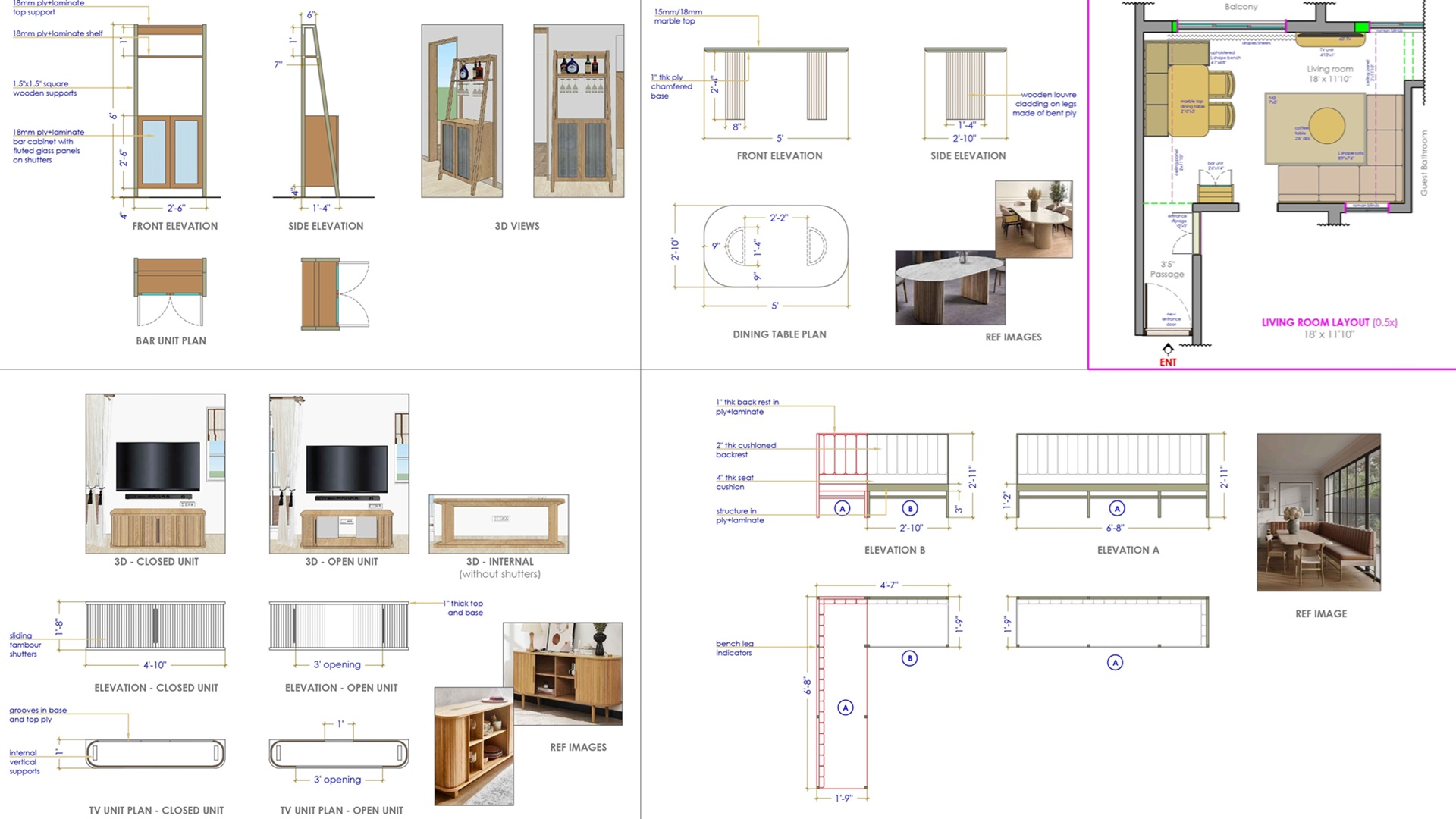
- technical drawings
- execution-ready drawings
This approach can be particularly useful if you already have a contractor, carpenter or execution team you trust. You are essentially paying for the planning and decision-making, while keeping control of execution.
Option 3: Design + Execution / Turnkey
A turnkey approach can make more sense if you:
- don’t have the time to coordinate contractors
- have multiple types of work happening simultaneously
- require civil, electrical, carpentry and other work
- want one team responsible for coordinating execution
- prefer a more hands-off process
The important thing is that you don’t automatically need turnkey simply because your home is small. The right service depends on the complexity of the project and how involved you want to be.
When You Probably Don't Need an Interior Designer
Professional interior design isn’t automatically necessary for every small home. You may be able to manage the project yourself if:
- the apartment already has a good layout
- you don’t need major civil modifications
- you are comfortable selecting furniture
- you need minimal custom carpentry
- your storage requirements are straightforward
- you have a reliable contractor or carpenter
- you have the time to coordinate the work
- you are comfortable making material and design decisions
In such cases, paying for a complete interior design service may not provide enough additional value to justify the cost.
However, even then, a one-time consultation or limited design service can help you validate the important decisions before execution.
Read our detailed guide on choosing between a carpenter, contractor, and interior designer for your home interiors.
When Is Hiring an Interior Designer More Valuable?
Professional design becomes more useful when there are more decisions that need to work together. Consider getting professional design input if:
- your home has limited storage
- the kitchen needs significant planning
- you have a compact living room
- multiple family members use the same space
- you need several custom furniture pieces
- you are changing electrical points
- you are doing civil or false ceiling work
- you are coordinating several contractors
- you have a specific aesthetic in mind
- you are unsure how to allocate your budget
- you don’t have the time to manage the design yourself
The more interconnected the decisions are, the more valuable good planning becomes.
Does a Smaller Home Mean You Should Spend Less on Design?
Not necessarily. A smaller home will generally have a smaller overall scope than a large home, but that doesn’t mean every design decision becomes easier. In fact, compact homes often require more precision.
- The kitchen still needs to work.
- The wardrobes still need to hold everything you need.
- The electrical points still need to be correctly positioned.
- The furniture still needs to fit.
- The circulation still needs to remain comfortable.
- And the home still needs to look cohesive.
So the objective shouldn’t be to spend as little as possible simply because the home is small.
Instead, ask: “Where will my money make the biggest difference to how this home functions?”
What Happens When Small-Home Interiors Are Poorly Planned?
The problems aren’t always immediately visible. A home can look attractive in photographs while still being frustrating to live in. Poor planning can result in:
- insufficient storage
- difficult-to-clean areas
- awkward furniture placement
- blocked circulation
- inconvenient electrical points
- unsuitable kitchen layouts
- oversized furniture
- unnecessary carpentry
- expensive rework
This is why the value of interior design shouldn’t be judged only by how the finished home looks. A successful interior should also make everyday life easier.
Can Good Interior Design Actually Save You Money?
It can, particularly when it prevents expensive mistakes. Professional planning can help you identify problems before materials are purchased or work begins.
For example, it is considerably easier to discover that a wardrobe is too deep on a drawing than after it has been manufactured and installed. The same applies to:
- furniture dimensions
- electrical points
- kitchen layouts
- lighting positions
- storage requirements
- material quantities
- circulation clearances
The value of design isn’t only what you add to the home. It is also what you prevent from going wrong.
What If Your Budget Is Very Limited?
If your budget doesn’t allow you to complete the entire home, that doesn’t mean you have to abandon professional design altogether. A better approach may be to create a complete plan first and execute it in phases. A design-only service can also be useful in this situation because you can have a clear plan before deciding when and how to execute each part of the project.
Learn how to plan and allocate your interior design budget with our detailed guide to interior budget planning.
So, Is Interior Design Worth It for a Small Home?
Absolutely yes, but the value depends on what your home and project actually require.
- If you have a simple apartment, limited carpentry and plenty of time to manage the process yourself, you may not need a full-service interior designer.
- But if your home has challenging space constraints, significant storage requirements, kitchen work, multiple contractors or complex electrical and civil changes, professional planning can be a worthwhile investment.
And you don’t necessarily have to choose between doing everything yourself and hiring a turnkey interior design company. A design-only service can give you professional space planning, drawings, visualization and technical guidance while allowing you to manage execution yourself.
If you’re planning small-home interiors and aren’t sure what level of design help you actually need, you can get in touch with New Leaf Designs to discuss your requirements.
A few helpful interior planning guides:
Home Interior Costs (2026 Guide)
Home Interior Services in Pune: What’s Included
FAQs
Is hiring an interior designer worth it for a small home?
It can be, particularly when space planning, storage, kitchen design, custom furniture or multiple contractors are involved. However, homeowners with simple requirements may be able to manage some or all of the project themselves.
Is interior design more important for a small home?
Good planning can have a significant impact on a small home because furniture, storage and circulation need to fit within a limited area. The smaller the space, the more important it becomes to make thoughtful decisions about how each area is used.
Can I design my small apartment without an interior designer?
Yes, of course. DIY can work if your home has a straightforward layout, limited custom work and you have the time and confidence to research materials, furniture and vendors. Professional consultation can still be useful for validating important planning decisions.
Is design-only interior design service suitable for a small home?
Absolutely! Design-only services can provide space planning, drawings, 3D visualisation, material guidance and technical documentation while allowing the homeowner to use their own contractor or execution team.
How can I reduce my small-home interior budget without compromising quality?
Focus on reducing unnecessary scope rather than automatically choosing cheaper materials. You can simplify décor, reduce unnecessary built-in furniture, phase the project and prioritise kitchens, storage, electrical work and frequently used components.
Does a small home need expensive interiors?
No. A small home does not need expensive finishes to function well. Good space planning, appropriate furniture dimensions, sufficient storage and sensible material selection can often have a greater impact than expensive decorative finishes.