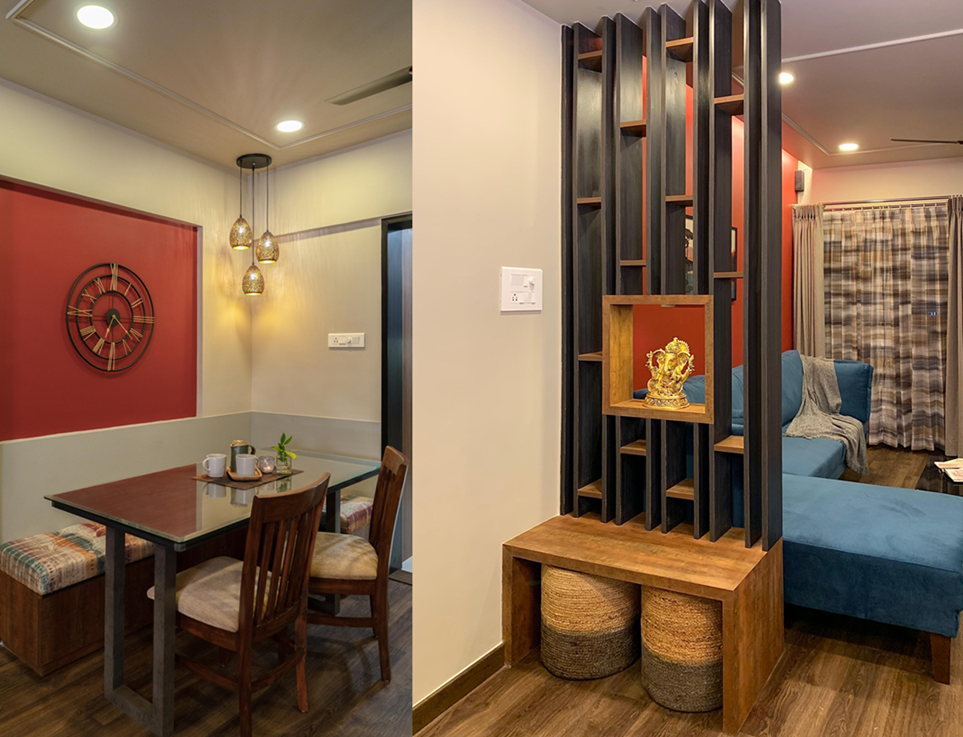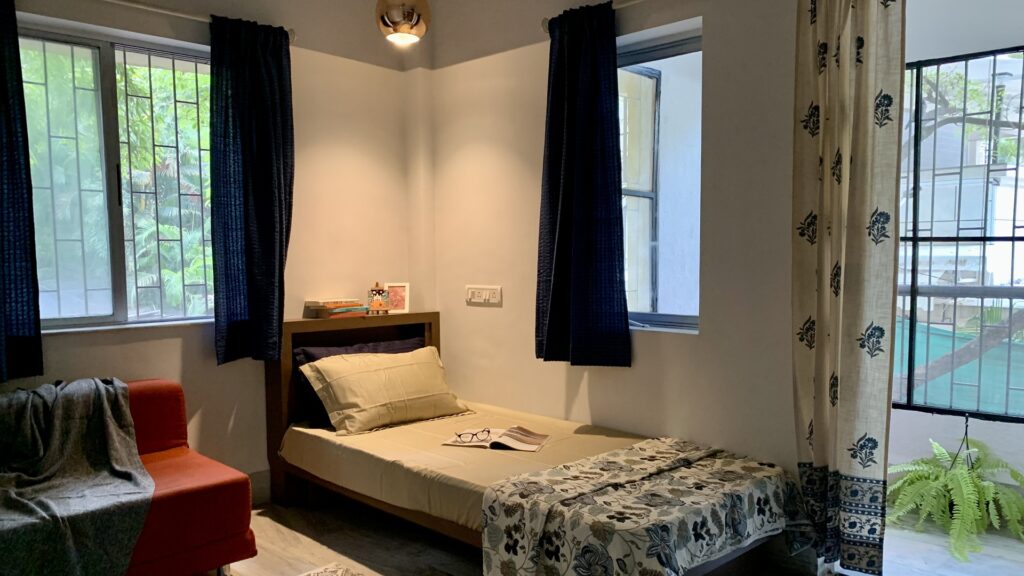
TL;DR – Making Rental Homes Comfortable Without Massive Changes
Renting doesn’t mean living with poor lighting, awkward furniture layouts, or unfinished interiors.
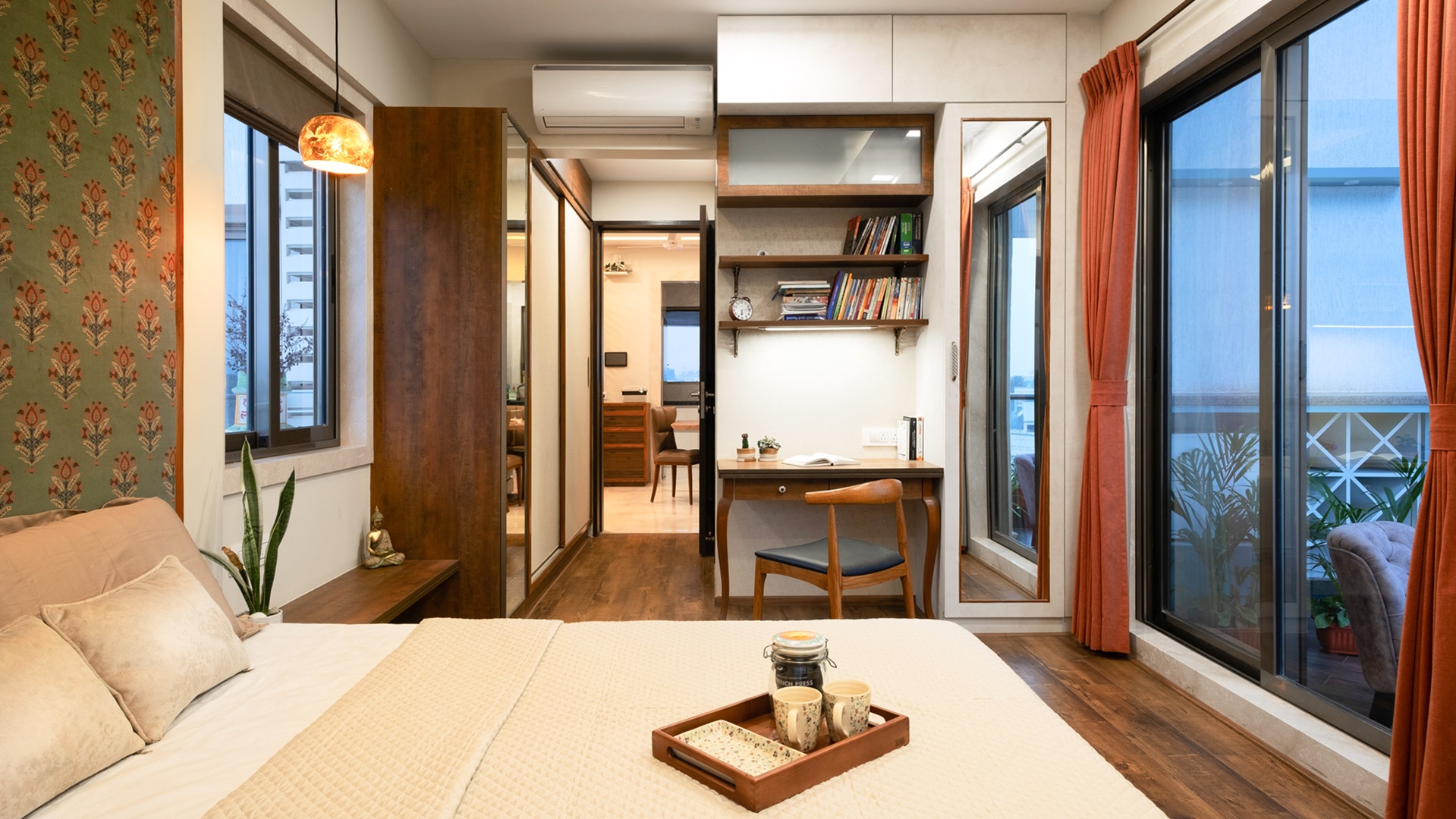
With the right decisions around lighting, fabrics, furniture scale, and layout, rental homes can feel thoughtful and comfortable without major renovations.
In this guide, we explain practical interior design ideas that work specifically for Indian rental apartments, including what renters should improve, what to avoid spending on, and how to design a home that adapts when you move.
Quick Rental Interior Upgrades That Work
- Floor lamps/rechargeable lamps instead of ceiling changes
- Large machine washable rugs to anchor furniture layouts
- Experimenting with curtains (colors and textures)
- Modular storage or furniture that move easily
- Leaned artwork instead of drilled frames
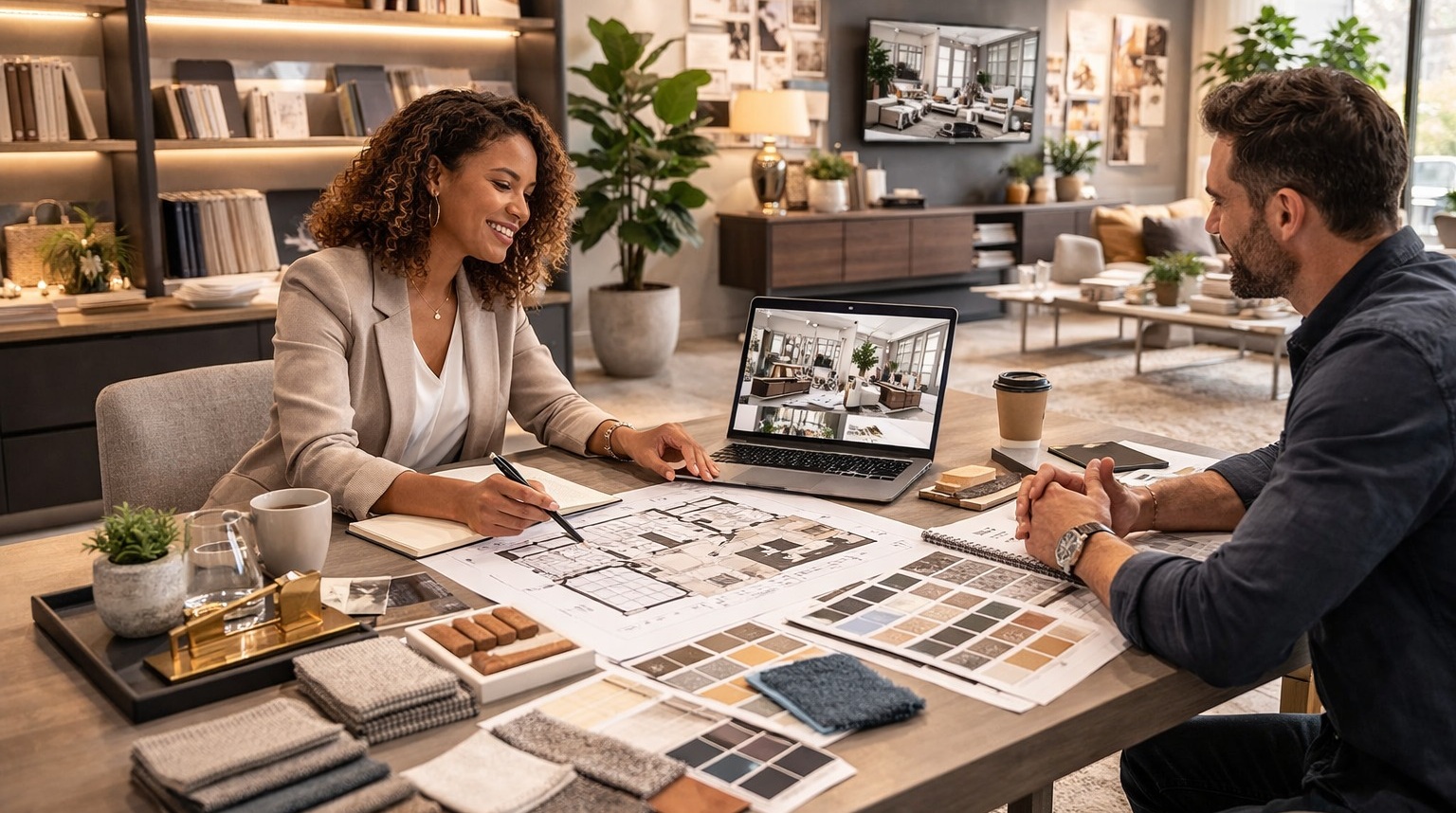
Need help planning a functional home layout? Explore our residential interior design services in Pune below.
Interior design for renters has its own challenges. Living in a rented home comes with a quiet emotional contradiction. You know the space isn’t permanent. But your days, routines, work, rest, and relationships are very real right now.
Many renters in India live in a constant state of pause, waiting to buy, waiting to move, waiting for “someday” to arrive. As a result, rental interiors remain half-finished, uncomfortable, or emotionally disconnected.
This New Leaf Designs guide is not about over-investing in a rental home. It’s about caring for the life you’re living today, without worrying about the future.
1. Common Interior Design Problems in Rental Homes
Across Indian rental interiors, a few patterns show up repeatedly:
- Dependence on harsh tube lights or whatever lighting the landlord provides
- Oversized furniture that overwhelms compact rooms
- Delaying basic electrical fixes that could improve daily comfort
- Ignoring proper work-from-home setups despite long working hours in India
- Overdoing neutral palettes until homes feel flat and impersonal
- Holding on to clutter that makes shifting stressful and expensive
- Relying on open storage that quickly collects dust
None of these issues are dramatic on their own, but together they make homes feel unfinished and difficult to live in. Rental-friendly design is less about decoration and more about reducing friction in everyday life.
While you’re here do check out how our quick interior styling and decor consultation service can help you plan your rental apartment far more effectively
2. Understanding Restrictions and Designing Around Them Smartly
Most rental agreements limit drilling, electrical changes, or wall modifications. However, renters often overestimate these restrictions and under-invest in liveability as a result. In practice:
- Basic electrical casing-and-capping can be added and removed while vacating
- Drilled walls can be repainted affordably using professional touch-up services
- Minor repainting costs are often reasonable when planned in advance
Designing smart rental interiors means anticipating the exit, choosing changes that are easy to reverse rather than avoiding improvement altogether.
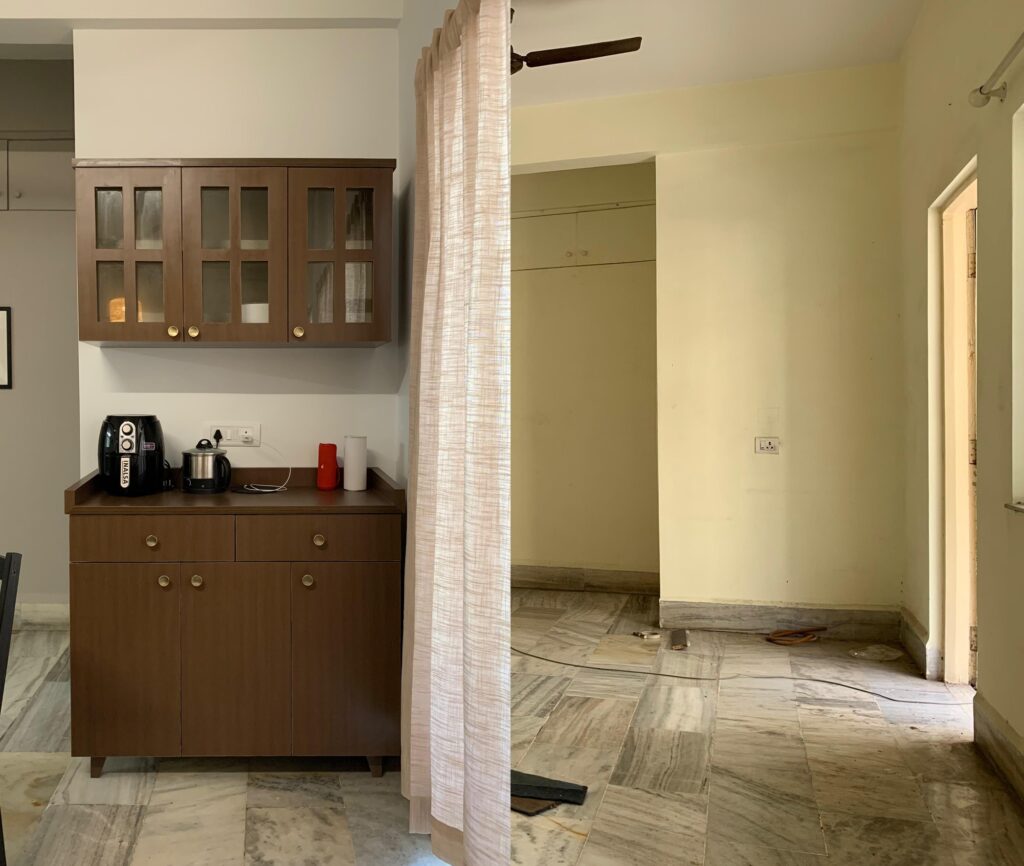
3. Rental Interior “Hacks” That Don’t Hold Up in Indian Homes
Many popular online rental hacks don’t translate well to Indian conditions.
- Peel-and-stick wallpapers struggle with dust, humidity, and uneven walls
- Stick-on tiles are time-consuming and often age poorly
- Cheap adhesive solutions tend to peel, stain, or leave residue
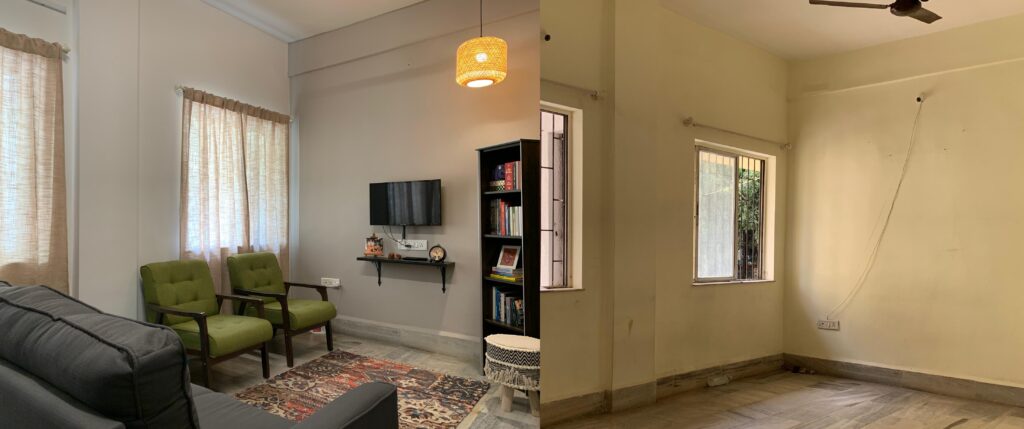
Instead of surface-level fixes, visual interest in rental interiors is better introduced through lighting, furniture, fabric, and layout. These elements don’t fight the environment they’re placed in.
4. Simple Interior Design Ideas for Rental Apartments
If renters had to prioritise just a few upgrades, these consistently make the biggest difference:
- A well-chosen wall colour in frequently used areas (repaintable later)
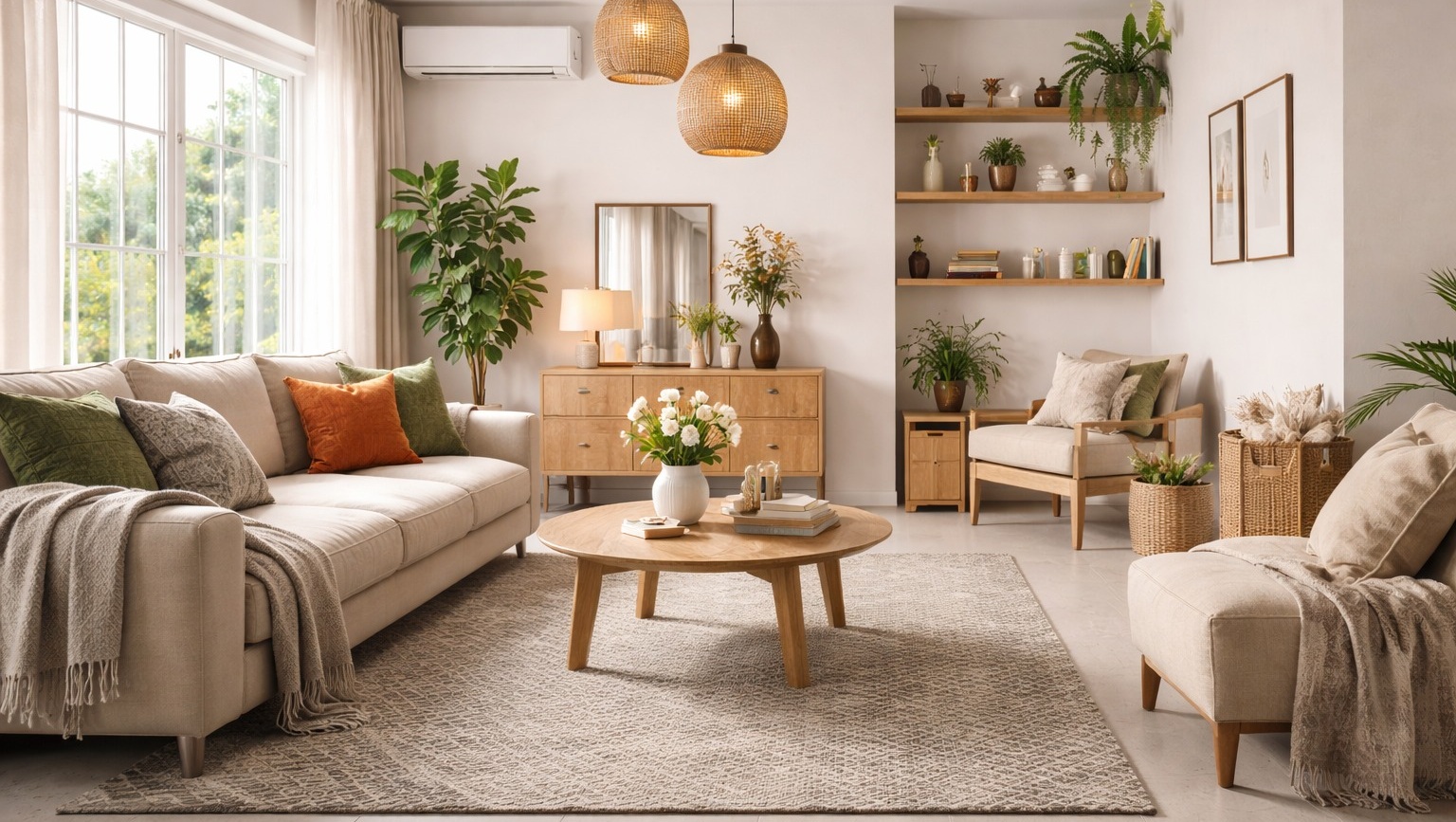
- Layered lighting using pendants, floor lamps, and rechargeable table lamps
- Rich fabrics through textured or sheer curtains, rugs, upholstery, and linen
These choices dramatically shift how a home feels without locking renters into permanent decisions.
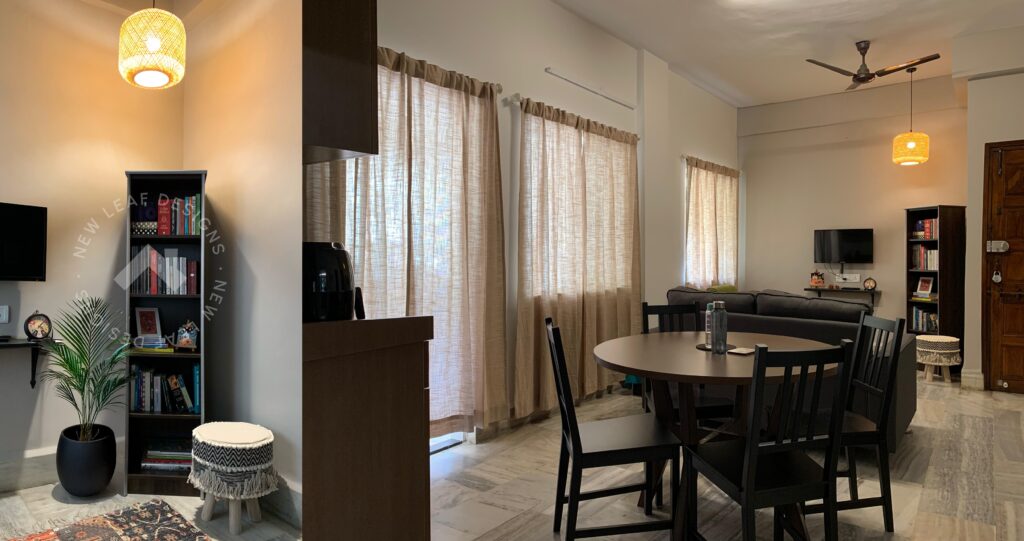
5. The Costliest Mistake - Designing Too Fast and Too Emotionally
Renters often rush to “fix” a home the moment they move in. This usually leads to:
- Trend-heavy purchases that date quickly
- Furniture that doesn’t suit the layout
- Holding on to outdated or unnecessary items
A more effective approach is mindful minimalism; treating minimalism as a lifestyle choice, not just a design style. Decluttering early reduces moving costs, simplifies layouts, and makes every new addition more intentional.
6. When a Rental Starts to Feel Like Home
Rental interiors feel intentional when it stops looking adjusted. Two factors matter most:
- Wall colour: If the existing paint is unpleasant, no amount of decor will compensate. Changing it, at least in key spaces, is often the most sensible decision.
- Thoughtful layouts: Furniture should never obstruct movement or feel forced. Dining tables need space to be used properly. Work desks must support long hours comfortably.
When everything has a clear place, the home feels designed and not stitched together in a hurry.
7. Where Renters Should Avoid Spending
Some upgrades look appealing but don’t offer good returns for renters:
- Large dining tables when extendable coffee tables can multitask
- Excessive wall decor that requires drilling
- Multiple small decor objects that create visual clutter
Instead, renters benefit more from:
- A few large, intentional pieces
- Floor-based decor like rugs, planters, cushions, and lamps
- Oversized artwork leaned on consoles or chests
Restraint in rental interiors often leads to stronger visual impact.
8. Designing Rental Interiors for Indian Homes
Rental interior design in India must account for:
- Dust and heat
- Compact room sizes
- Elevator and doorway constraints during moves
- Frequent city relocations
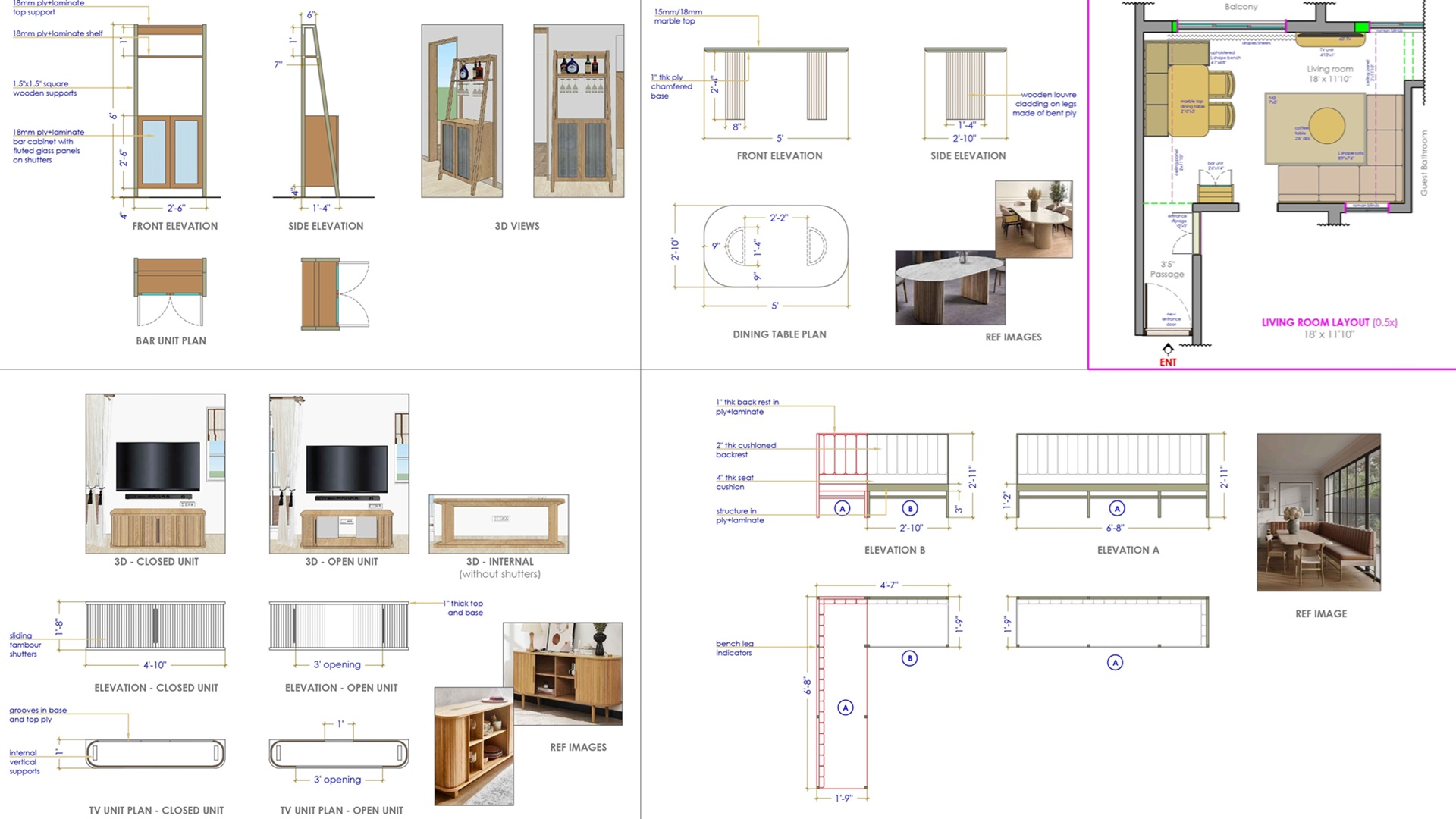
Covered storage with shutters ages better than open shelves. Modular or detachable furniture is easier to move. Furniture that’s too bulky often becomes a liability rather than an asset.
Explore our detailed guide on some of the best storage ideas for Pune apartments.
9. Designing for Movement, Not Permanence
Indian renters move often. Designing with this in mind makes life easier:
- Modular sofas that adapt to new layouts
- Adjustable work desks that support long hours
- Furniture that can be dismantled easily
Equally important is maintaining a reliable service ecosystem such as trusted electricians, plumbers, painters, packers & movers, internet providers, and deep cleaning services. This practical preparedness is as much a part of rental living as décor itself.
10. A More Confident Way to Think About Rental Homes
Renting doesn’t make a home less worthy of care. Temporary homes still deserve comfort, order, and personality. For many urban Indians—single professionals, migrants, long-term renters, these spaces are where daily life unfolds. With thoughtful choices, rental homes can feel grounded and personal, without the pressure of permanence.
Temporary Changes, Lasting Ease
Good interior design for rental homes in India is not about shortcuts. It’s about making fewer, better decisions that improve daily life now and still move easily when you relocate.
A home doesn’t need to be owned to be meaningful. It just needs to be designed with intention.
Explore related interior guides from New Leaf Designs:
Small Kitchen Design Ideas for Compact Homes
Cleaning & Maintenance Tips for Home Interiors
Best Places to Buy Online Furniture in India
Best Places to Buy Curtains & Upholstery