TL;DR: Avoid These Interior Budget Mistakes Before Starting Your Home Project
Most interior budget overruns don’t happen because designers overcharge. They happen because homeowners start projects without proper planning.
If you’re planning home interiors in Pune, avoid these common mistakes:
- Starting interiors without a clear budget
- Choosing trendy materials instead of durable ones
- Adding electrical points too late
- Overusing false ceilings and expensive finishes
- Making layout changes during execution
Fixing these mistakes early can easily save ₹2–5 lakhs in a typical home interior project.
If you’re planning interiors for a new home or renovation, New Leaf Designs helps homeowners plan layouts, materials, and budgets before execution begins.
Home interiors is one of the biggest investments you’ll make after buying the home itself. And like most long-term investments, interior design requires careful budgeting. But here’s the truth many homeowners realise too late:
“Most interior cost overruns come not from cheating or hidden charges, but from simple planning mistakes.”
From choosing the wrong materials to making decisions at the wrong time, budget leaks happen quietly and quickly.
This guide breaks down the biggest interior budget mistakes Indian homeowners make, and more importantly, how you can avoid them.
1. Starting Home Interiors Without a Clear Budget
This is the No.1 interior budget mistake. Many homeowners start design discussions without having clarity on whether they’re looking at:
- Basic interiors
- Mid-range interiors
- Premium interiors
Many homeowners begin interior planning without knowing their realistic interior design budget, which leads to cost overruns later. This creates an expectation mismatch from day one. Why it causes issues:
- Designers may propose options beyond your range
- Material choices shift later → leading to rework
- Expectations and estimates don’t align
How to avoid it: Set a realistic range and share this openly with your designer so they can design accordingly.
A quick reference guide for ballpark home interior project estimates based on carpet area.
2. Trying to Do Design Every Room at Once
One of the biggest home interior planning mistakes is treating every room as equal priority. Homeowners overspend because they treat every corner like a “must-do-now” or a “must-do-all” zone.
Why it causes issues:
- Money gets distributed widely instead of strategically
- Essential areas like the kitchen receive less attention
- Decorative elements eat into functional needs
How to avoid it: Prioritise your interiors in this order:
1. Kitchen
2. Wardrobes, lofts and built-ins
3. Electrical & Lighting
4. Work-from-home / study areas
5. Remaining loose furniture
6. Soft furnishings & décor
Focus on function-first — good design follows naturally.
3. Choosing Trendy Finishes Instead of Practical Materials
This is one of the most common interior design mistakes homeowners make today. Common trend traps:
- Fluted MDF everywhere
- Full-glossy acrylic kitchens
- Back-painted glass wardrobes
- Open shelving in dusty cities
- Dark matte finishes that show fingerprints
- Complicated false ceilings
- Glass railings
- Glass wall panelling
Why it causes cost overruns:
- Trendy materials = higher cost
- High maintenance = long-term expenses
- Replacements are expensive
How to avoid it: Choose materials based on:
- Usage
- Cleaning time
- Durability
- Local weather
- Lifestyle
Find out which interior design trends and choices homeowners regret after moving in.
4. Underestimating Electrical Costs
Electrical planning is one of the most underestimated parts of interior budget planning. Typical mistakes:
- Adding electrical points late
- Forgetting to plan for electronics and appliances
- Forgot about router/TV/charging points
- LED strip lighting everywhere
- Underestimating the need for WFH outlets
- Smart-home additions mid-way
Why it affects cost: Electrical work is cheapest to plan early and most expensive to redo later.
How to avoid it: Before carpentry begins, finalise:
- Switchboard placements
- Appliance points
- Lighting plan (have fewer but good quality branded light fixtures)
- TV + internet layout
- Bedroom charging zone
- Work desk electrical requirements
5. Not Understanding How Materials Affect Budget
Many homeowners select finishes based solely on looks — not lifespan or maintenance. Example: PU, acrylic, back-painted glass → look great but require high labour cost + careful maintenance.
Why it causes issues:
- Frequent replacements
- Extra coats
- More labour
- More prep work
- More maintenance
- Expensive
How to avoid it:
Invest in:
- Plywood, branded laminates and matching edge bands
- Soft-close channels (main drawers)
- Good countertop material
- Quality hinges
Save in:
- Laminates instead of acrylic
- Simple false ceiling designs
- Fewer hardware accessories
- Avoiding unnecessary wall panelling
Custom interiors make this balancing act easier because you decide where premium is needed — instead of buying fixed-priced factory modules.
Quick guide on how to maintain and care for your interior surfaces
6. Overestimating What Modular Interiors Offer
Many homeowners assume modular interiors are cheaper, which becomes a costly interior planning mistake later. Common misconceptions:
“Modular will cost less.” (Not always true.)
“Factory-made means stronger.” (Depends on core material.)
“Modular = no wastage.” (Fixed sizes sometimes create more filler elements.)
“Modular works in every room.” (Not for irregular layouts.)
Why it affects budget:
- Extra accessories inflate modular cost
- Transport & factory overheads add up
- More filler panels → wasted money
- Standard sizes don’t maximise space → need additional furniture
How to avoid it: Choose custom interiors for:
- Wardrobes
- Storage units
- Compact flats
- Niches, beams, columns
- Full-home interiors
Choose modular when speed is your priority.
7. Overusing False Ceilings and Decorative Lighting Without Considering Cost
False ceiling looks great — but can add significant cost. Typical interior budget mistakes:
- Complex multi-layer ceilings
- Excessive cove lighting
- LED profile designs everywhere
- Forgetting the additional painting requirement
Why it affects budget: More layers = more gypsum + more labour + more electrical work.
How to avoid it:
- Keep ceilings minimal and functional
- Use indirect lighting selectively
- Add wall sconces/floor lamps for ambience instead
Minimal designs save money AND look timeless.
8. Making Changes During Execution
This is the most expensive interior mistake homeowners make during projects. For example:
- Moving a wardrobe after frames are built
- Changing laminate after shutter cutting
- Replanning lighting after false ceiling closes
- Increasing or decreasing storage after carpentry starts
- Changing material selections post start of work on-site
Why it affects cost:
- Material wastage
- Labour rework
- Delay in timeline
- Repainting/dismantling cost
How to avoid it: Always ask for:
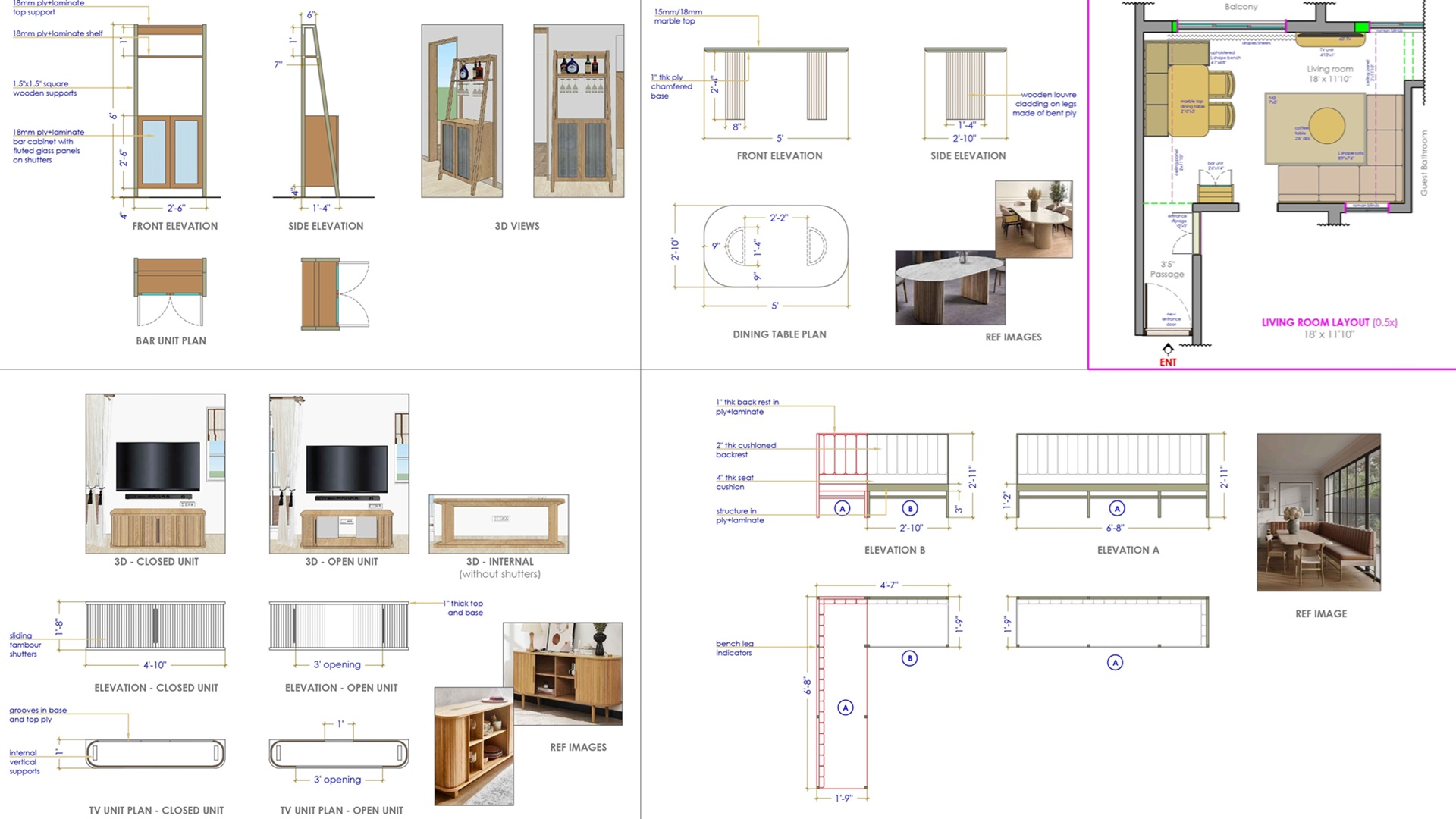
- Final 2D layouts
- Final 3D designs
A quick guide on how to use 2D and 3D drawings
- Full material samples and/or moodboards
- Hardware lists
Sign-off → execute → avoid mid-way changes. It saves money and ensures quality.
9. Not Considering Long-Term Value (Only Short-Term Cost)
A big interior budget mistake is looking only at the upfront price instead of durability. For example, short-term thinking would be to choose MDF everywhere as it’s cheaper. The long-term reality – humidity, load, and daily use, increases replacement cost.
How to avoid it: Think 10–15 years ahead. Spend on quality finishes like hardware, light fixtures, branded laminates, quartz/granite, etc. Save on excessive panelling, accessories or trendy finishes.
Custom interiors shine here because you can mix premium + affordable materials smartly based on usage.
10. Not Asking for a Detailed Estimate (BOQ) Before Starting
A BOQ (Bill of Quantities) is the single biggest tool for interior budget control. Skipping one is dangerous because:
- No clarity on scope
- No clarity on materials
- Unclear hardware cost
- No clarity on individual room budgets
How to avoid it: Ask for a BOQ that includes:
- Materials used
- Dimensions and sizes/quantities
- Hardware brands
- Details of finishes
- GST
- Transport
- Detailed breakdown of all expenses
New Leaf Designs provides this before execution, which is why cost overruns rarely happen for our clients.
11. Bonus: Hiring an Interior Designer Too Late
Many homeowners approach interior designers after construction or renovation work has already started.
This limits layout planning, electrical placement, and storage optimisation. As a result:
- wardrobes don’t fit properly
- electrical points need rework
- storage becomes inefficient
Planning interiors before starting execution helps control cost and improves design quality.
Final Thoughts
As experienced interior designers in Pune,we have observed that avoiding interior budget mistakes isn’t about cutting corners, it’s about planning smart, choosing wisely, and staying aligned with your lifestyle.
Quick tips to avoid overspending:
- Set a clear budget early
- Prioritise functional areas
- Choose long-lasting materials
- Avoid trend-based decisions
- Plan electrical early
- Keep ceilings simple
- Reduce mid-execution changes
- Use custom carpentry for better value
When budgets, materials, layouts, and execution details are aligned early, interiors become predictable, efficient, and stress-free. Good planning protects both your investment and your peace of mind.
Understanding these mistakes helps homeowners make informed decisions—and avoid costly surprises later.
Explore related interior budgeting and planning guides:
Home Interiors Cost in Pune (2026 Guide)
Interior Budget Planning for Pune Homes
Hidden Interior Costs Homeowners Should Know
Best Online Stores For Contemporary Furniture
Trusted Places to Buy Fabrics & Home Furnishings