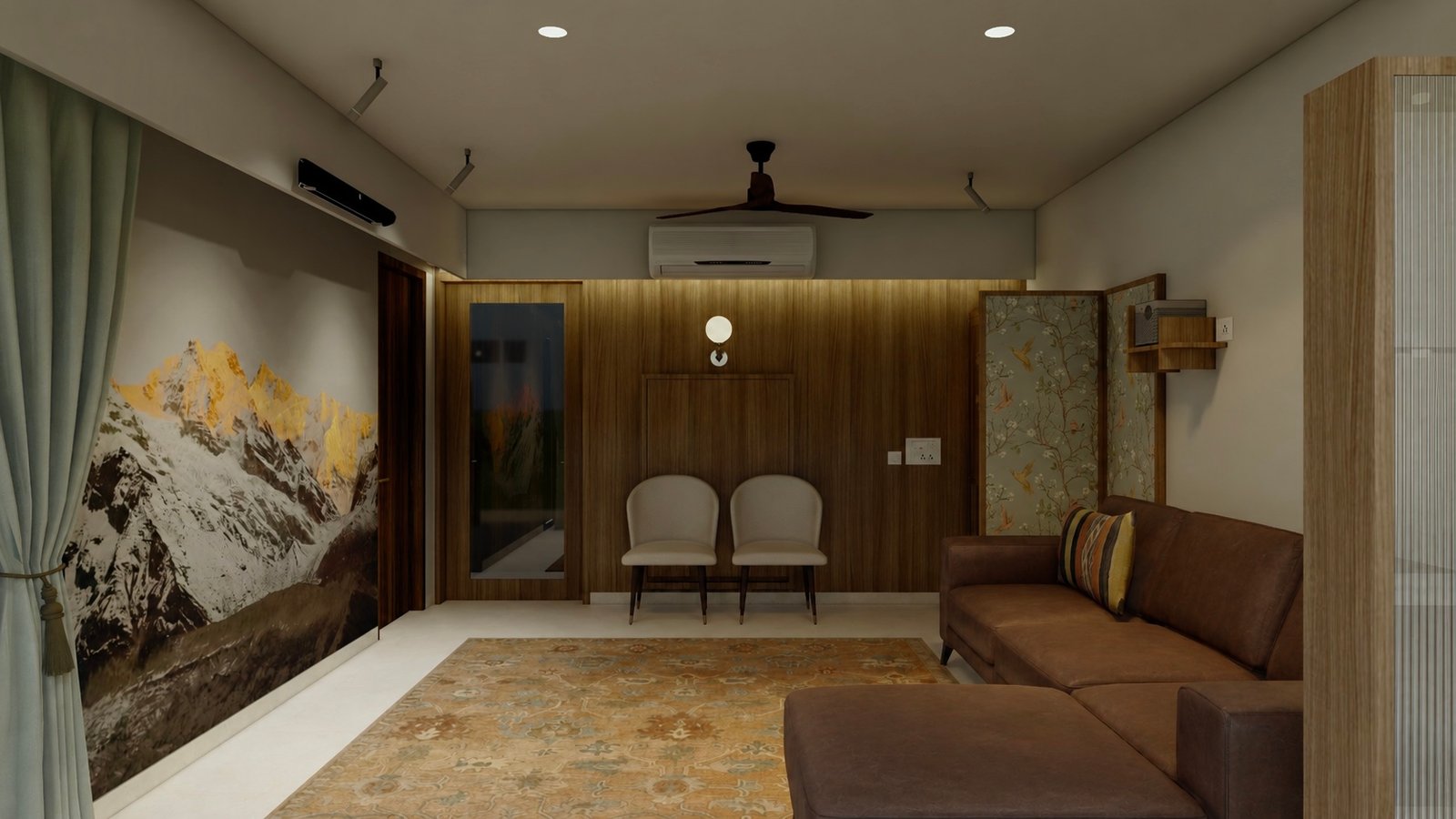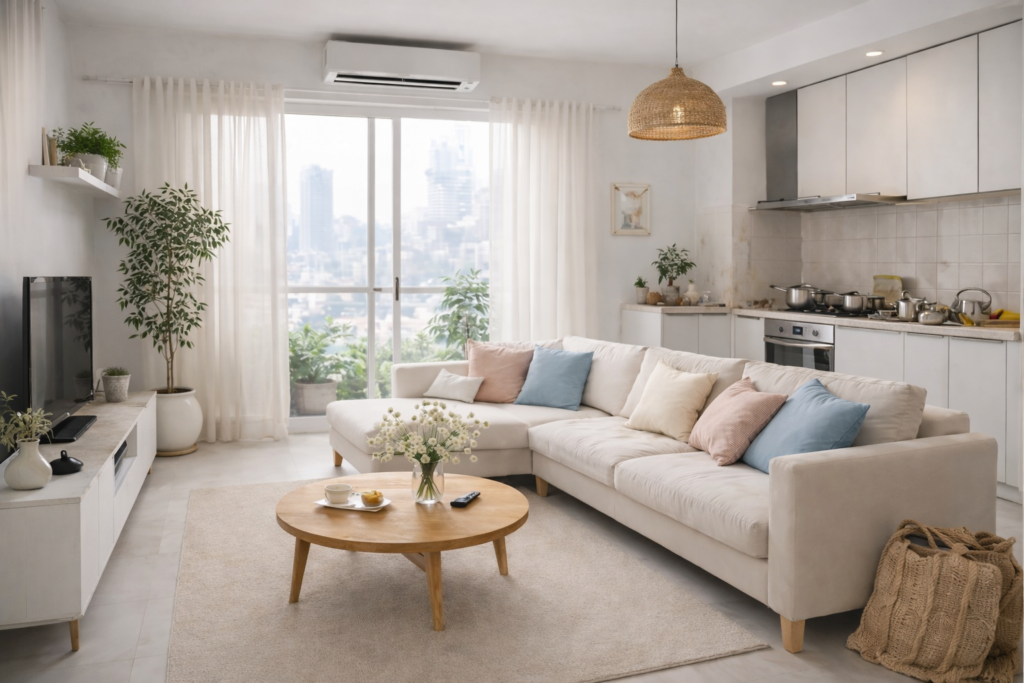
Interior design trends move fast. In Indian cities especially, homes are compact, lived-in, and expected to age well over 10–15 years. What looks stunning on Instagram or Pinterest often doesn’t translate into comfort, durability, or long-term value.
As experienced interior designers working closely with Indian homeowners, we’ve seen a growing mismatch between trendy interiors and livable homes. This list isn’t about shaming trends—it’s about recognizing when a trend has peaked and is now working against homeowners.
Below are Indian interior design trends that need to retire in 2026, so we can make space for smarter, more timeless design choices.
1. Curved Sofas
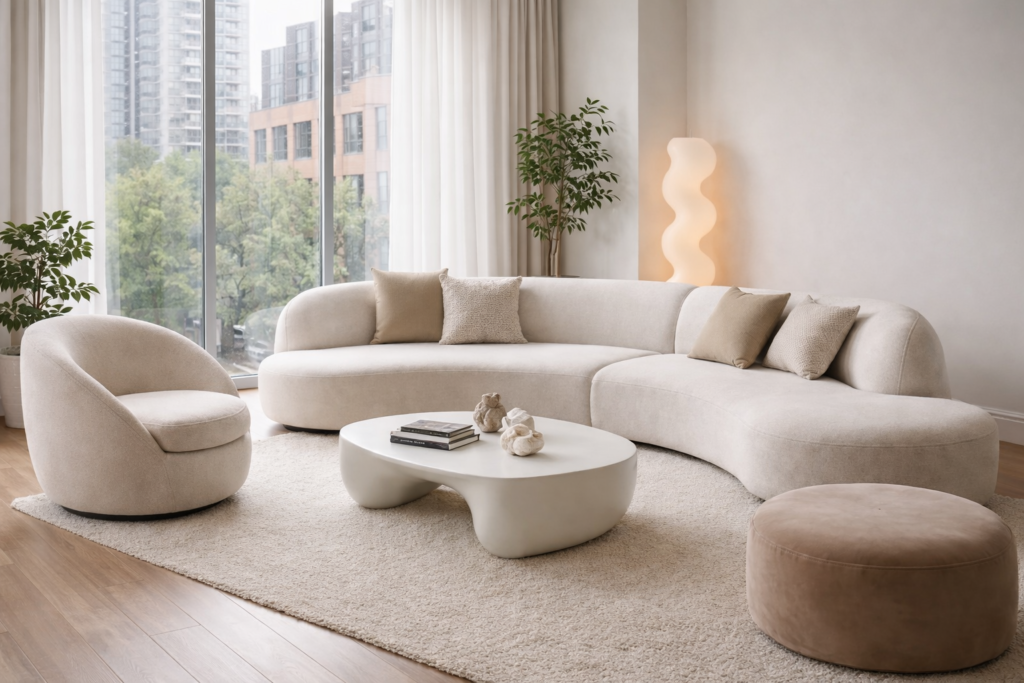
Curved sofas were refreshing when they first appeared. They softened rigid layouts and brought visual interest. But in compact city apartments, they can sometimes be more problematic than practical.
- Consumes more carpet area than straight-lined furniture
- Difficult to place efficiently against walls
- Often priced at a premium due to custom fabrication
- Not always ergonomically ideal for long sitting hours
- Can look dated very quickly once the trend fades
Better alternative: Use curves selectively—accent chairs, mirrors, or soft-edged décor—while keeping core furniture functional and space-efficient.
2. The Light & Pastel Aesthetic
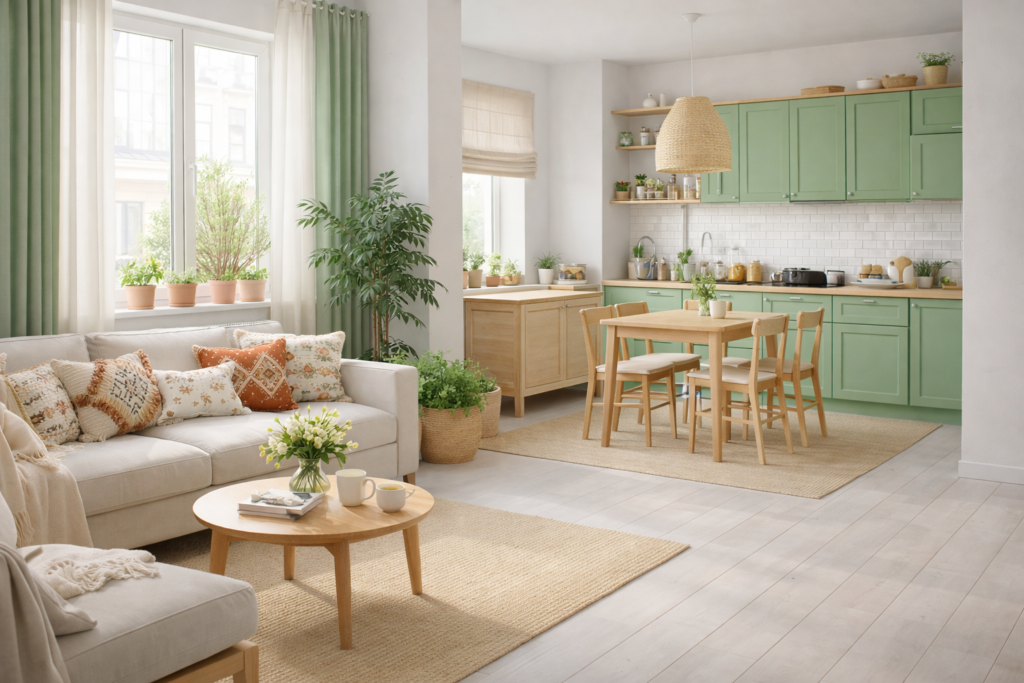
This is a bit of a no-brainer. This aesthetic is minimal, bright, and camera-friendly—but extremely unforgiving in Indian conditions. White and pastel interiors:
- Show dust, pollution, and wear almost immediately
- Are difficult to maintain in Indian cities
- Perform poorly in kitchens due to spices, oil, and heat
- Require constant cleaning to look “new”
What works in a Scandinavian climate doesn’t always work in Mumbai, Pune, Delhi, or Bengaluru.
Better alternative: Warm neutrals, earthy tones, and mid-tone palettes that age gracefully and are easier to maintain.
3. Cane Webbing Overuse
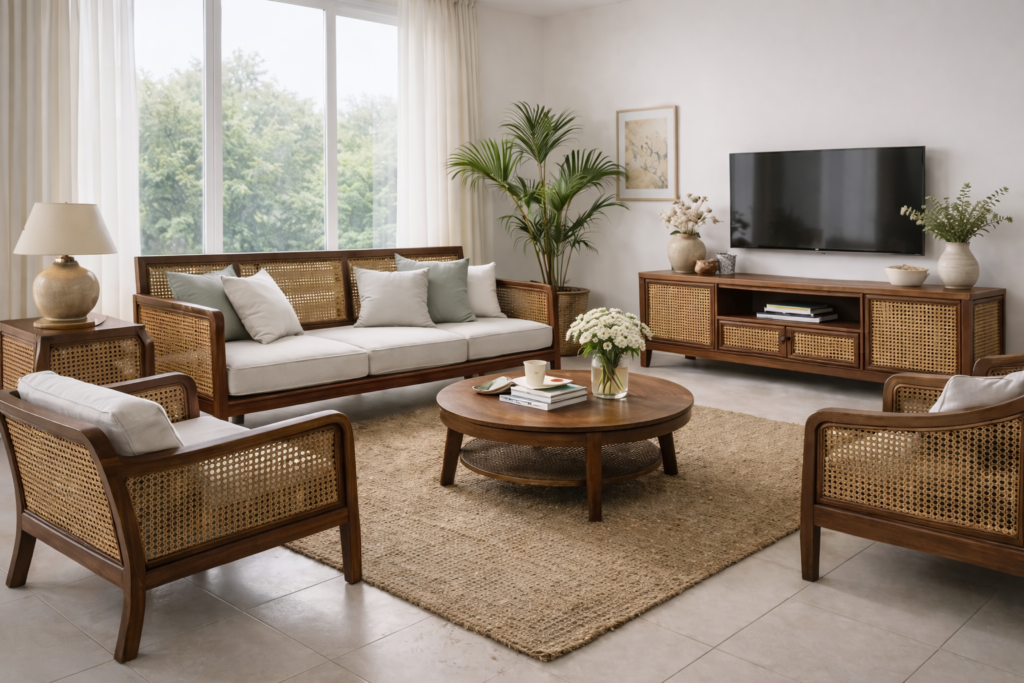
Cane and rattan came back beautifully—as a nod to Indian craftsmanship and heritage. But like many revived trends, it has been overused. Issues homeowners face:
- High maintenance (dust accumulation, humidity sensitivity)
- Expensive to repair or replace
- Fragile for high-use furniture
- Looks repetitive when used everywhere
Better alternative: Limit cane to one or two hero pieces rather than making it the dominant material across the home.
Browse our curated list of online furniture stores in India, recommended by interior designers.
4. Zen / Japandi Neutral Interiors
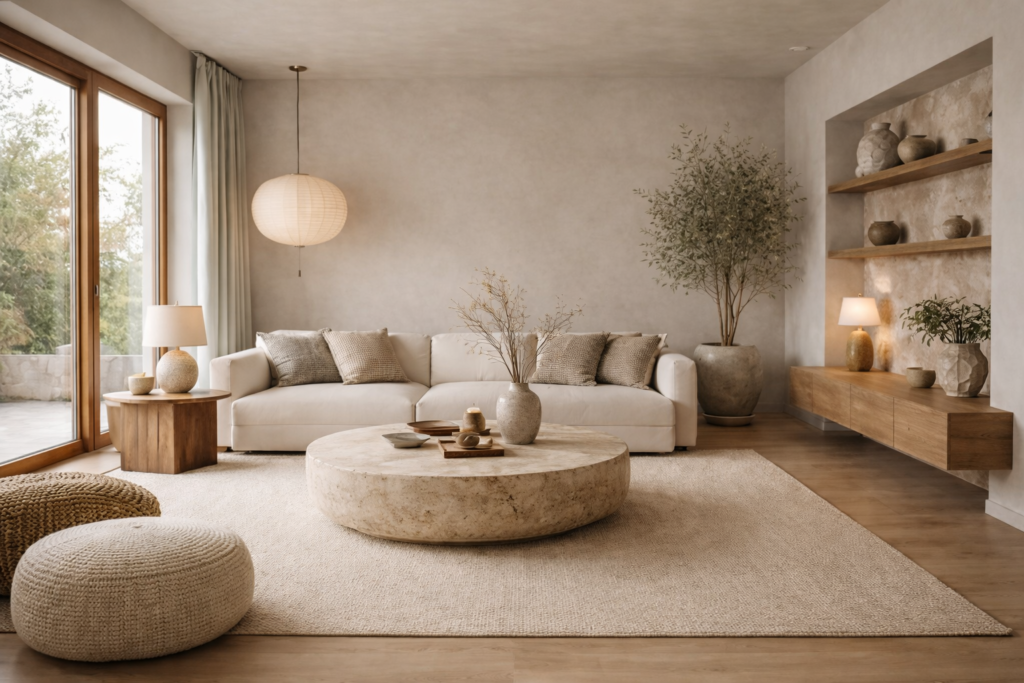
Neutral, calming interiors sound great in theory—but in practice, they can sometimes fall flat in Indian homes. It also becomes difficult to add to these spaces over time, or add your own personal touches and character, as it may interfere with the overall aesthetic.
- Extremely expensive finishes (microcement, lime plaster, stone textures)
- Light-coloured materials stain easily
- Spaces can start feeling monotonous over time
Better alternative: Layered neutrals with contrast—texture, colour accents, and material variation that adds warmth without overwhelming the space.
5. Wall Mouldings Used Without Context
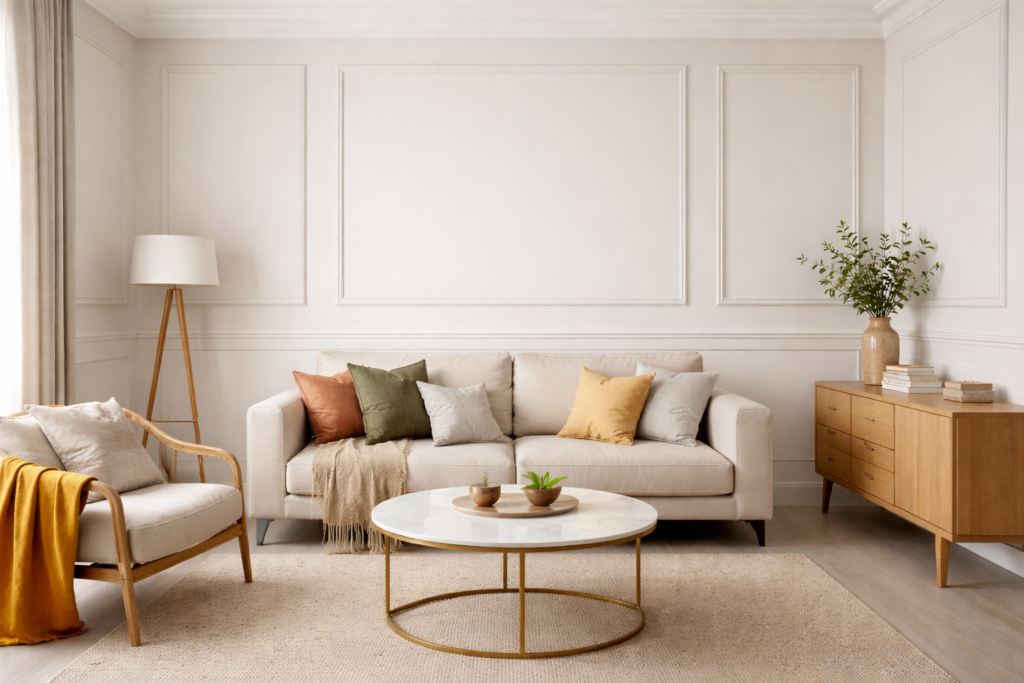
Wall mouldings are architectural elements—not decoration fillers. In Indian homes, they are often applied randomly without understanding proportion, ceiling height, or style language. Common mistakes we see:
- Mouldings in modern minimal homes
- Poor scaling in low-ceiling apartments
- Mixing classic detailing with contemporary furniture
Better alternative: Use mouldings only when the interior language supports them—and keep them subtle.
6. Tropical Wallpapers Overuse
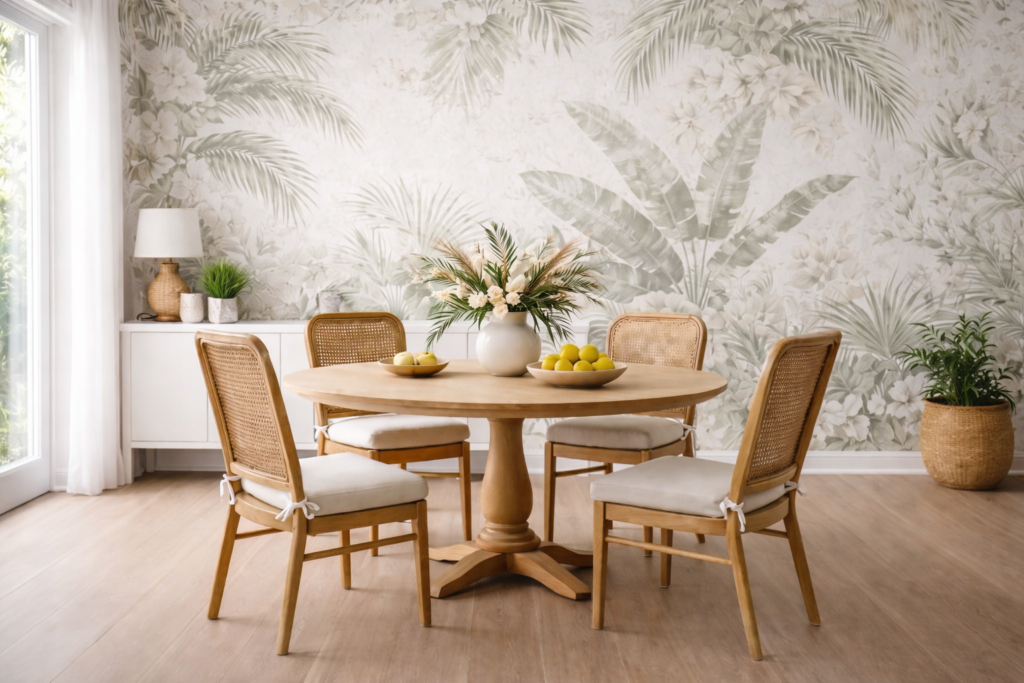
Palm leaves, banana prints, flamingos—tropical wallpapers have been everywhere. Why it’s time to move on:
- Visually overpowering in small rooms
- Difficult to coordinate with furniture long-term
- Feel dated very quickly
- Often dictate the entire design instead of complementing it
Better alternative: Use textured wallpapers, subtle murals, or paint finishes that don’t hijack the room.
7. Designer Study Chairs That Aren’t Ergonomic
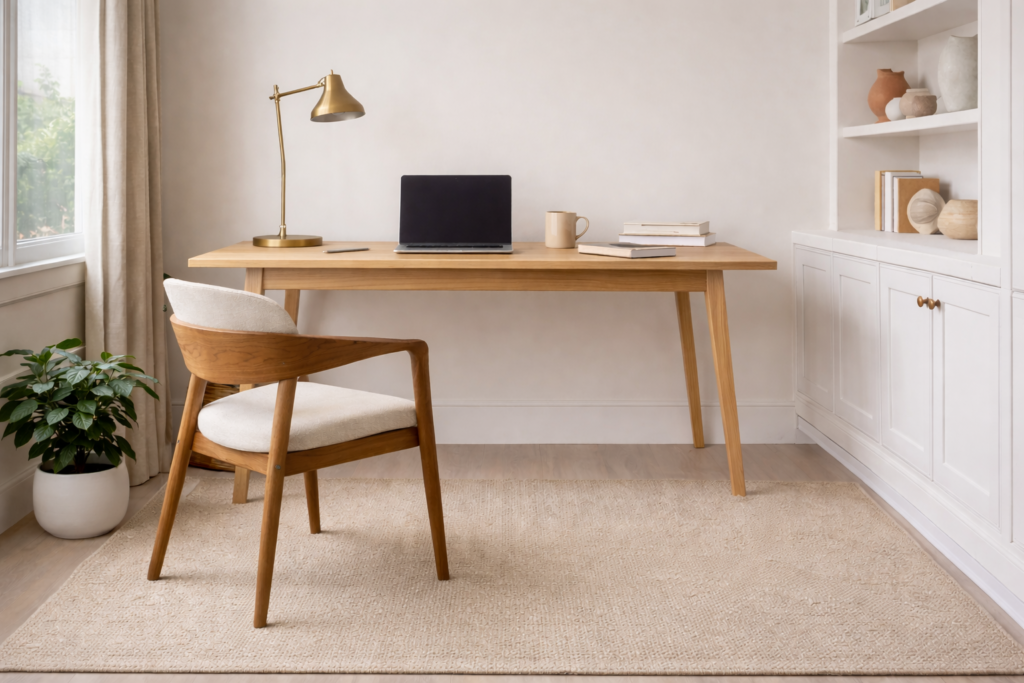
These chairs look great in photos—but are disastrous for daily work. Problems:
- No lumbar support
- Fixed height and armrests
- Unsuitable for long work hours
- Cause posture and back issues over time
With work-from-home becoming permanent, ergonomics can’t be optional.
Better alternative: Adjustable ergonomic chairs, sit-stand desks, and workspace setups designed for real usage—not styling shots.
8. Over-Lighting Homes
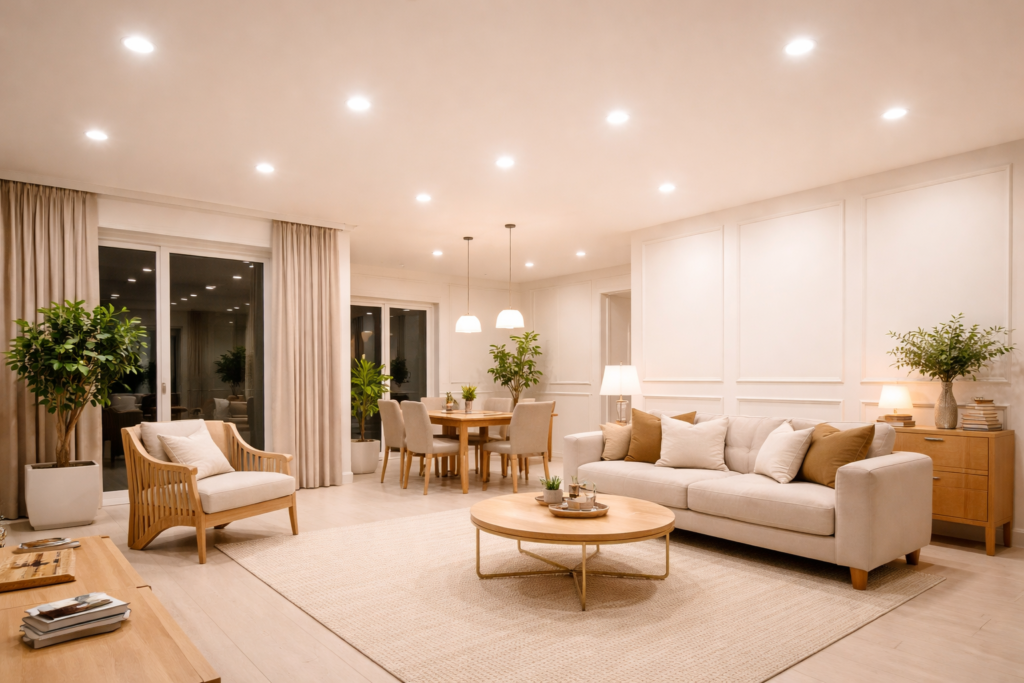
Indian homes are among the most over-lit interiors globally. We associate over-lighting with safety. Too many Indian homes suffer from:
- Excessive downlights leading to harsh, uncomfortable lighting
- Multiple unnecessary lighting layers – too many spots, LED’s
- High installation costs and increased electricity bills
Better alternative: Fewer lights, better planning. Focus on task lighting, warm ambient layers, and thoughtful accent lighting.
9. Glossy Surfaces (Acrylic, High-Gloss Laminates, Glass, High Gloss Flooring and Countertops)
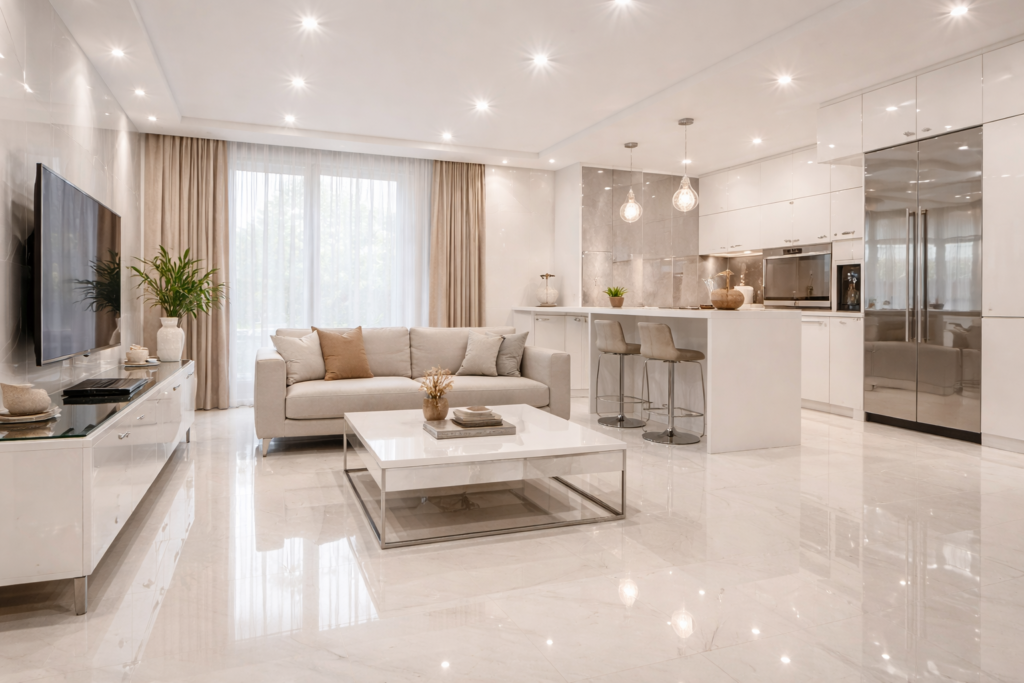
High-gloss finishes promise luxury, but are often stressful. Homes should calm you—not overstimulate you. Issues include:
- Scratches may appear quickly that are impossible to hide
- Excessive reflection causing visual fatigue
- Surfaces looking old very quickly
Better alternative: Matte, satin, or textured finishes that absorb light and feel more grounded, and are also easier to maintain.
10. Arches Everywhere

Arches originated in Mediterranean and classical architecture. When used sparingly, they’re elegant. When used everywhere—they’re overwhelming. This trend is already ageing fast. Current overuse includes:
- Entryway arches
- Arched wall mouldings
- Arched niches without architectural logic
Better alternative: Respect architectural context. Use arches only where structure and proportions support them.
11. “Safety Doors” in Apartments
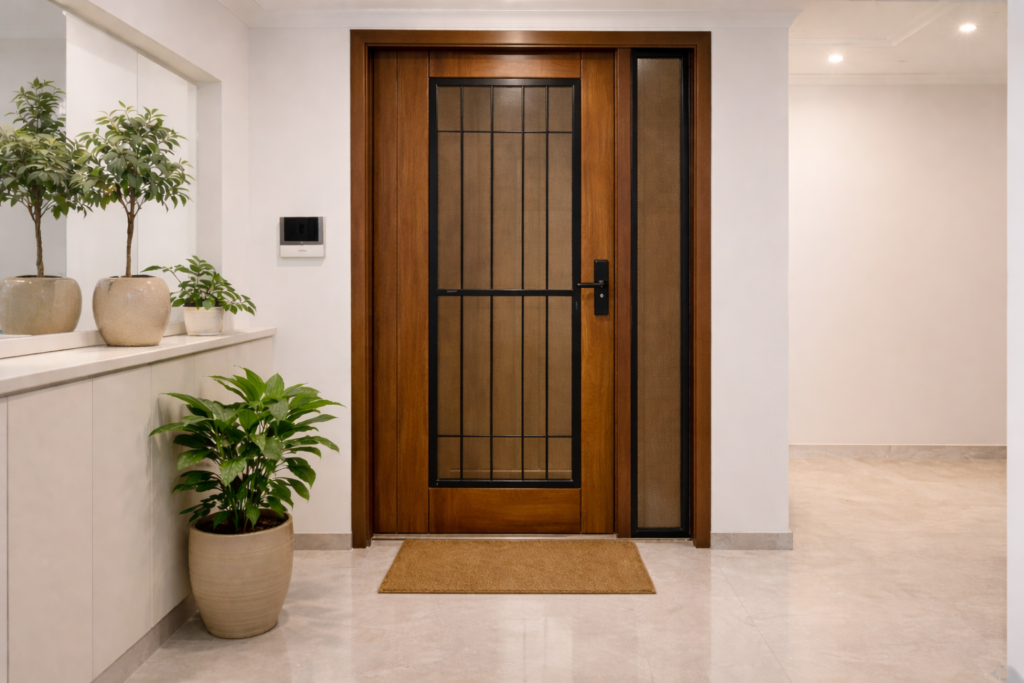
Safety doors with grills—originally designed for independent homes needing security, natural light and ventilation—have become a default, especially in city apartments. In some cases, they make sense such as where cross ventilation is needed or there are legitimate security concerns. But most apartments today are gated communities, so these “safety” doors offer no real usability apart from being just a fancy decorative entrance feature. In most gated communities:
- Security is already handled
- Intercoms and video door phones are standard
- Safety doors add cost without real benefit
Better alternative: Solid main doors with quality hardware, smart locks, and video door systems.
12. Fabric Pendant Lamps
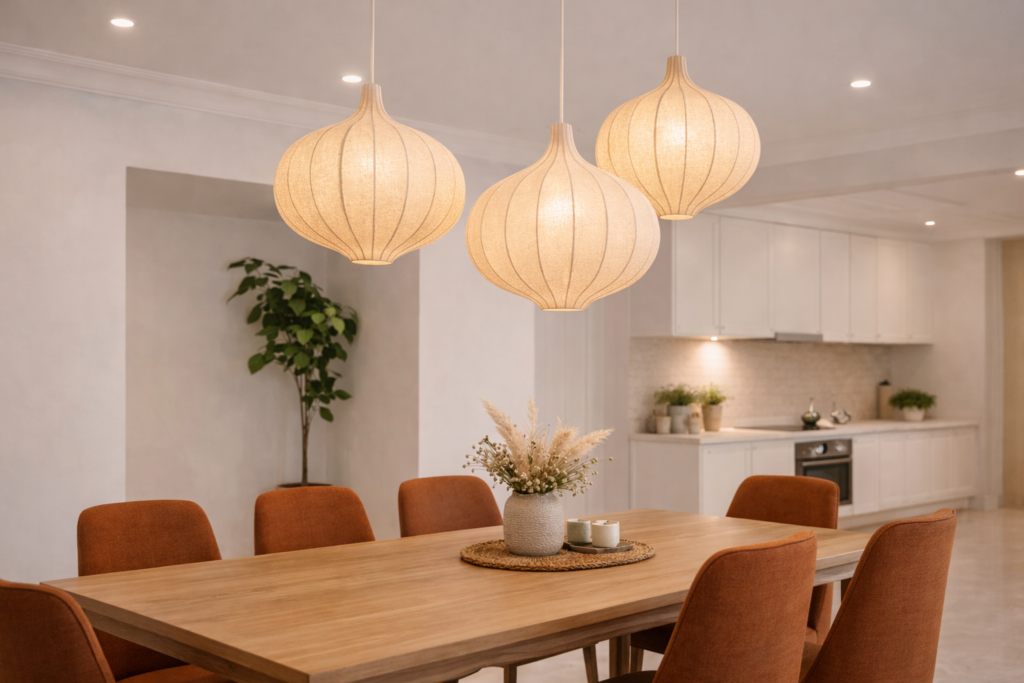
This is one interior design trend that we can definitely leave behind in 2026. Fabric pendant lamps look beautiful but are rarely practical. Fabric pendants:
- Trap dust aggressively
- Are nearly impossible to clean
- Fade over time
- Are expensive to replace
Better alternative: Glass, metal, or easy-to-maintain lighting fixtures with similar visual impact.
What Should Replace These Interior Design Trends?
The future of interior design trends in India is not about chasing aesthetics—it’s about:
- Longevity
- Ease of maintenance
- Ergonomics
- Climate responsiveness
- Lifestyle alignment
- Economics
At New Leaf Designs, we recommend designs that last long after trends fade.
If you’re planning a new home or renovation in 2026, focus less on what’s trending online and more on what will still feel right five years from now.