TL;DR — Why 2D and 3D Interior Plans Matter
Most homeowners approve interior designs without fully understanding the drawings — which is one of the biggest reasons projects go wrong during execution.
2D layouts show exact measurements, furniture placement, and electrical planning, while 3D visualizations help you see colors, materials, and lighting before construction begins. Understanding both helps you:
- avoid costly layout mistakes
- finalize furniture placement confidently
- reduce redesigns during execution
- visualize your home before work starts
At New Leaf Designs, we walk every client through their 2D layouts and 3D visualizations step-by-step so decisions are clear before execution begins.
Interior design layouts and drawings can feel confusing for homeowners—especially if you’ve never worked with floor plans or visualizations before. Yet these drawings play a critical role in how your home is planned, executed, and experienced.
Many homeowners search for the difference between 2D and 3D interior design before starting a project. In simple terms, a 2D plan focuses on layout, measurements, and technical accuracy, while a 3D visualization helps you see the finished space with materials, colors, and lighting.
This guide explains the difference between 2D and 3D interior design layouts, how to read them, and how to use each effectively during planning and execution. Understanding this early can help you avoid common mistakes, reduce revisions, and make more confident design decisions.
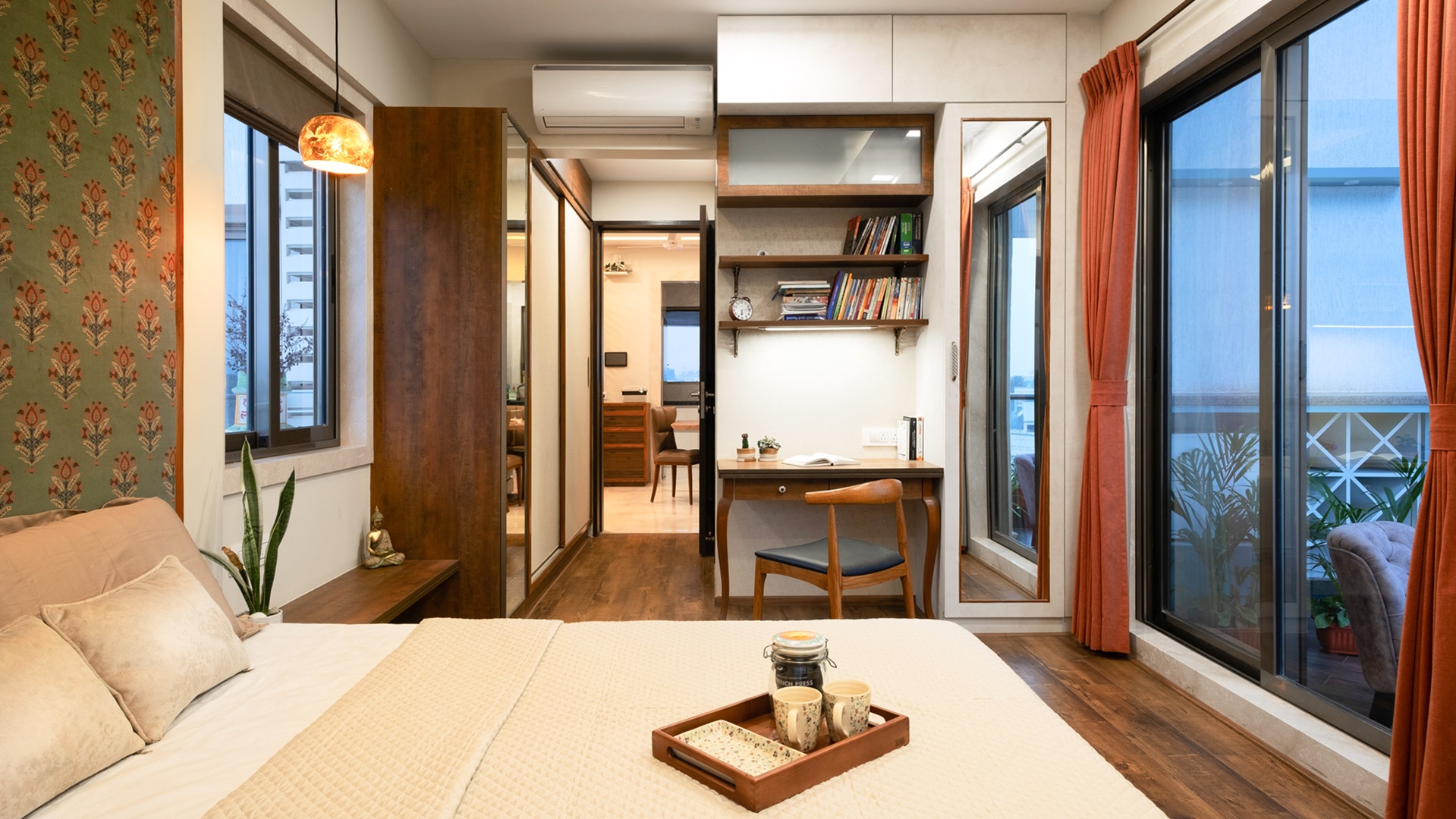
Before we begin, view this real 3BHK project in Singapore, where contractors built entirely from drawings and 3D visuals
Understanding the Difference Between 2D and 3D Interior Design
Before diving into details, let’s clarify the difference between the two.
- 2D Interior Design Layout:
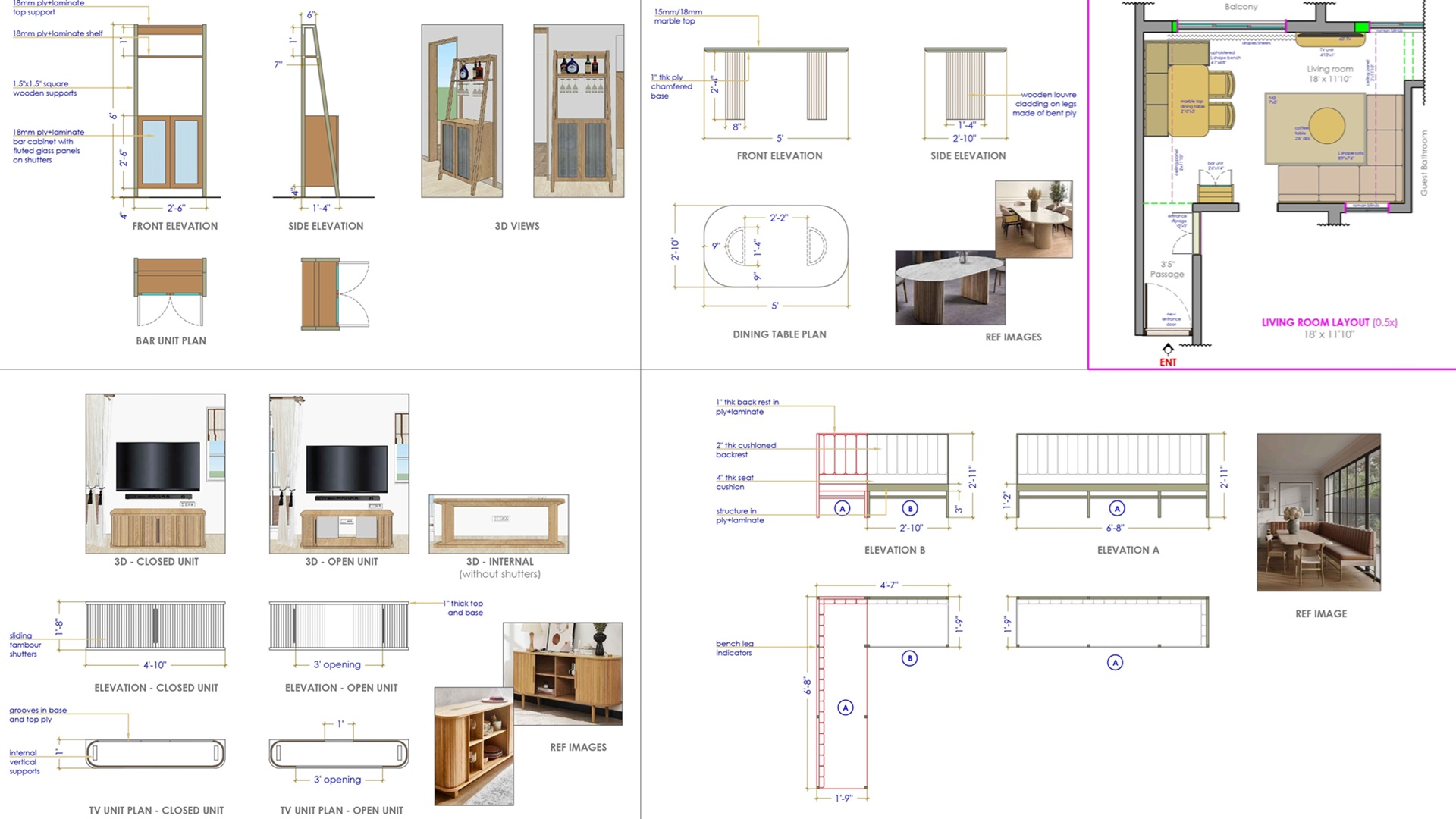
A 2D plan (two-dimensional) is a top-down view of your space, showing walls, furniture layout, electrical points, and measurements. It focuses on structure and space planning – helping you understand the scale, flow, and function of your rooms. - 3D Home Interior Design:
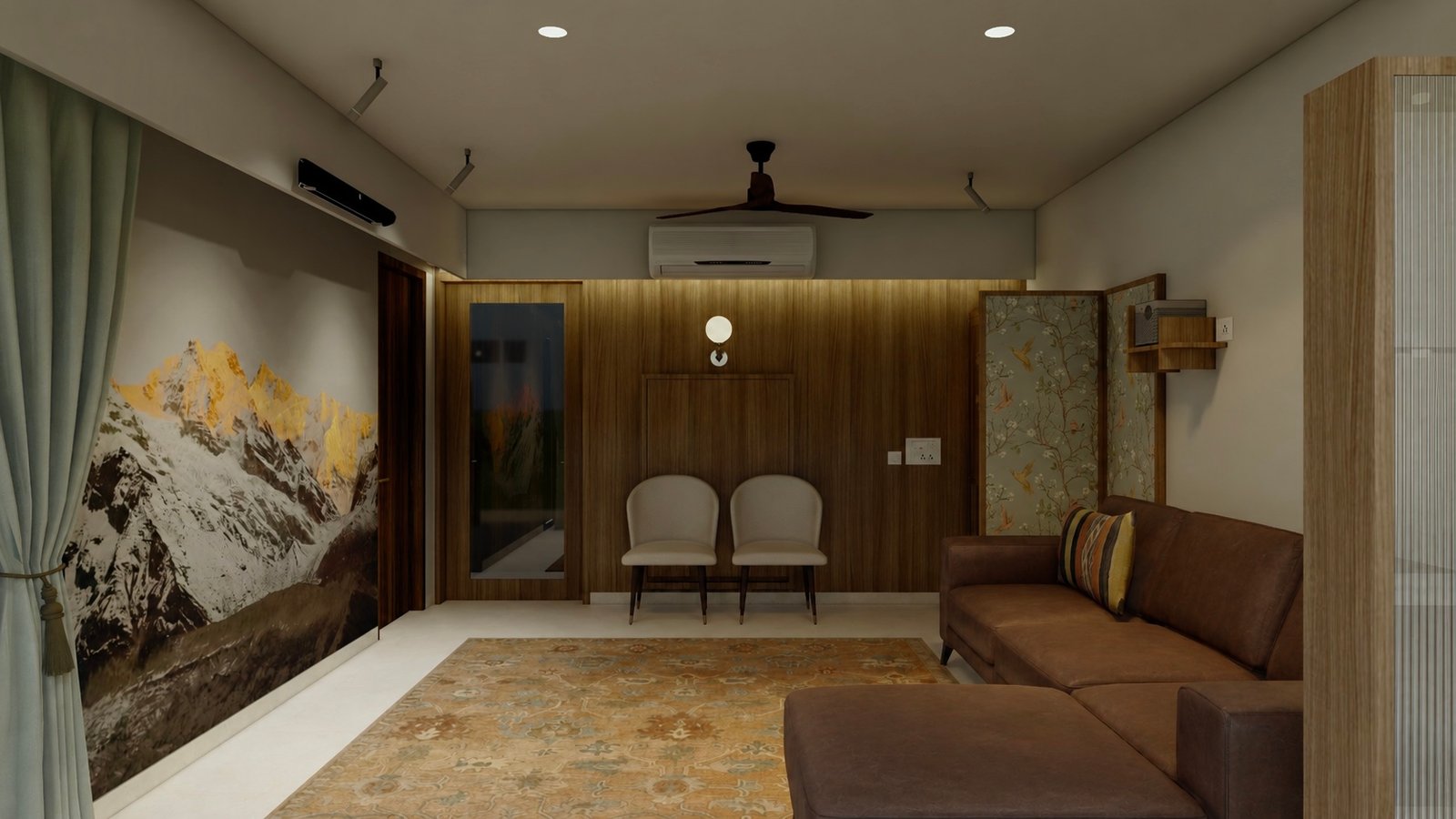
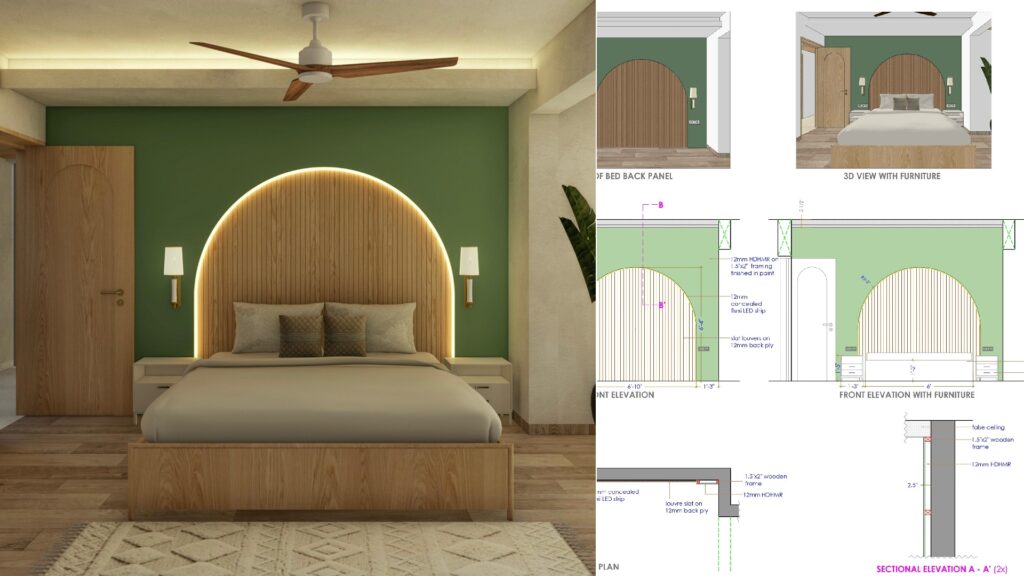
A 3D plan takes that same layout and brings it to life visually. It’s a digital model of your home that shows textures, lighting, colors, and materials in real-time. You can see how your home will actually look once completed – before construction even begins.
Both 2D and 3D drawings are essential, but they are not interchangeable. Each serves a specific role at different stages of the design and execution process.
Why Homeowners Should Learn to Read 2D & 3D Plans
Imagine spending on renovations only to realize later that your sofa doesn’t fit your living room or your kitchen feels cramped. That’s exactly what clear design visualization prevents.
By understanding both 2D and 3D plans, you can:
- Identify design errors early
- Optimize space and furniture placement
- Choose colors and materials with confidence
- Make informed budget and layout decisions
- Reduce costly changes during execution
At New Leaf Designs, we guide our clients through every plan – explaining symbols, dimensions, and visuals – so you feel confident at every stage. Most execution issues arise not from poor workmanship, but from misunderstandings at the drawing stage.
How to Read a 2D Interior Design Layout
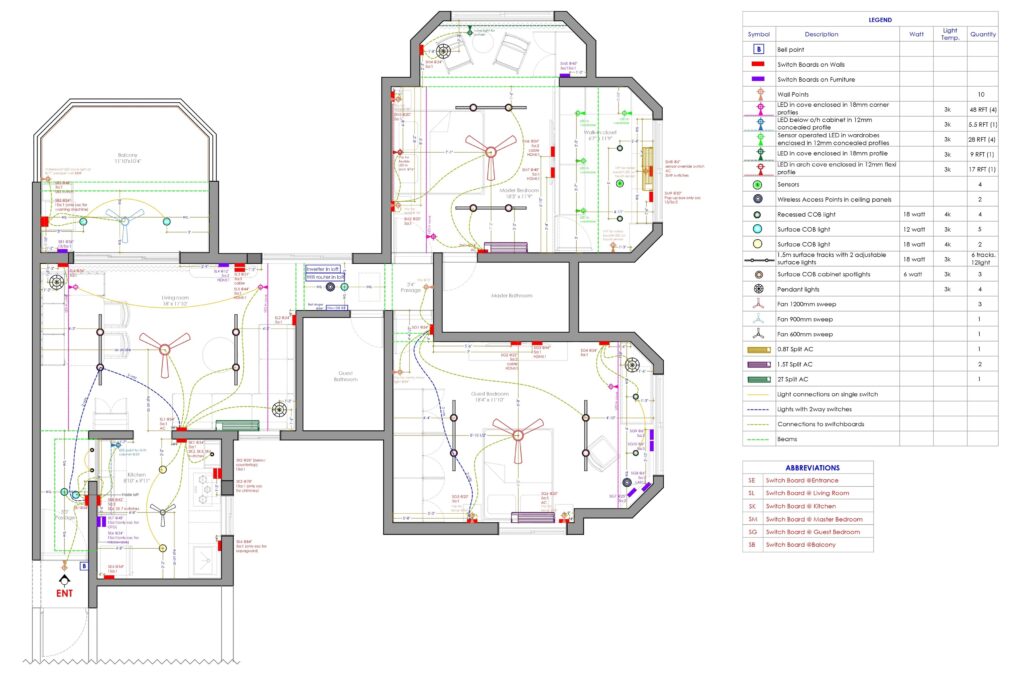
A 2D interior design layout is like a map of your home. Here’s how to read it easily:
- Start with the Orientation:
The arrow or compass icon shows which direction your home faces – essential for natural light planning. - Understand Walls and Partitions:
Thick lines represent walls, while thinner or dotted lines may indicate furniture outlines or movable partitions. - Spot Key Areas:
Each room is labeled – living, dining, bedroom, kitchen, etc. Understanding proportions helps you visualize space flow. - Read Symbols and Legends:
Furniture, fixtures, and electrical points use standard symbols. Your designer will share a legend explaining each one. - Focus on Measurements:
Dimensions (usually in millimeters or feet) indicate distances between walls, door openings, and furniture placement.
2D drawings are the primary reference used by contractors and carpenters during execution, which is why accuracy and clarity at this stage are critical.
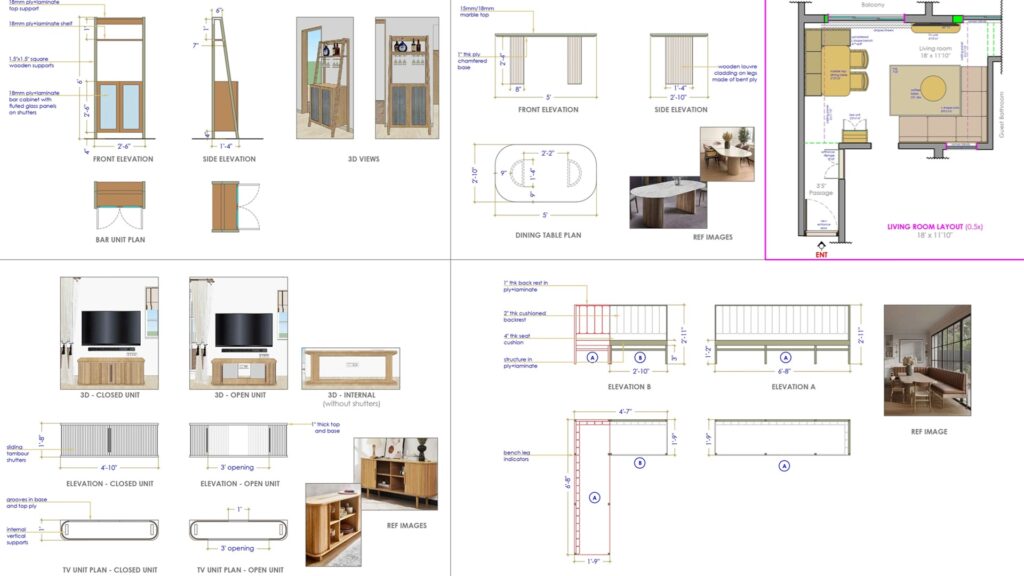
Plan View vs Elevation View in Interior Design
A plan view shows the space from above (like a floor plan), while an elevation view shows a vertical surface from the front, such as a wall, wardrobe, or kitchen cabinet. Both are used together to communicate accurate construction details.
How to Read a 3D Interior Design Layout
Once your 2D interior design layout is approved, it’s time to explore your space in 3D. This is where your imagination becomes tangible. However, it’s important to understand that 3D visualisations are a planning and communication tool. Final execution depends on site conditions, material availability, and workmanship, which is why 3D views are always supported by detailed 2D drawings.
A 3D home interior design layout lets you:
- See how furniture, lighting, and textures interact
- Compare color palettes and wall finishes
- Visualize real-world materials like wood, marble, or fabric
- Adjust layouts or designs before construction begins
At New Leaf Designs, we use advanced 3D visualization interior design tools to help clients experience their future home virtually – walking through every corner, switching lighting moods, and exploring finishes before final approval.
Once layouts are finalised, furniture selection becomes easier. You can refer to this guide on online furniture stores recommended by interior designers to understand sizing, materials, and fit before purchasing.
Common Mistakes Homeowners Make With 3D Designs
Many homeowners assume that 3D visuals represent exact construction drawings. In reality, 3D interior design is primarily a visualization tool, while 2D drawings guide the actual execution used by contractors and carpenters. Understanding this difference helps avoid miscommunication during the build phase.
Key Differences Between 2D and 3D Interior Design
2D Plan
3D Visualization
Shows layout and measurements
Shows visual appearance
Used by contractors
Used for homeowner visualization
Technical drawings
Realistic renders
Using 2D & 3D Plans Effectively: Tips for Homeowners
To make the most of your design journey, here’s how to use your plans strategically:
- Be Open During Revisions:
Early feedback saves time and money. Discuss changes during the 2D phase before moving to 3D renders. - Use 3D for Decision-Making:
Unsure about wall colors or furniture finishes? Compare alternatives using realistic 3D visuals before execution. - Stay Budget-Conscious:
Use 2D layouts to estimate material requirements and labor. Your designer can help you align your budget accordingly. - Plan Lighting & Décor Early:
The 3D model shows how artificial and natural light affect your space. Adjust décor, curtains, and lamps for perfect ambiance. - Refer During Execution:
Keep both your 2D and 3D plans handy during construction – they guide contractors and ensure the final result matches the design.
How 2D and 3D Drawings Work Together
A well-planned interior design project relies on both technical accuracy and visual clarity. 2D drawings define layout, dimensions, and coordination, while 3D visualisations help homeowners understand how the space will look and feel once completed.
When used together, these tools reduce ambiguity, improve communication between all stakeholders, and significantly lower the risk of errors during execution.
Final Thoughts
Reading 2D and 3D plans isn’t just a technical step – it’s a way to connect deeply with your home before it’s built.
At New Leaf Designs, we believe clarity builds confidence. By walking you through every drawing and visualization, we ensure your dream home looks and feels exactly the way you imagined.
If you’d like to understand how 2D and 3D drawings fit into the overall interior design process, you can explore our home interior services guide or learn how we use 3D visualization during online interior design consultations.